
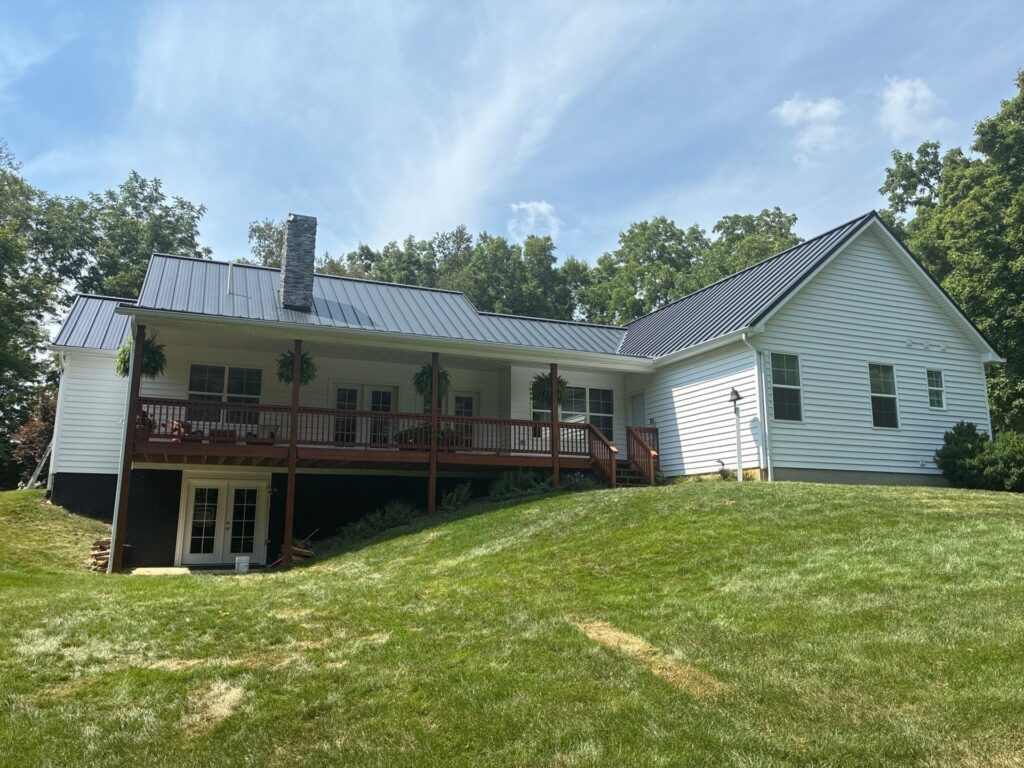
- Town: Xenia, OH
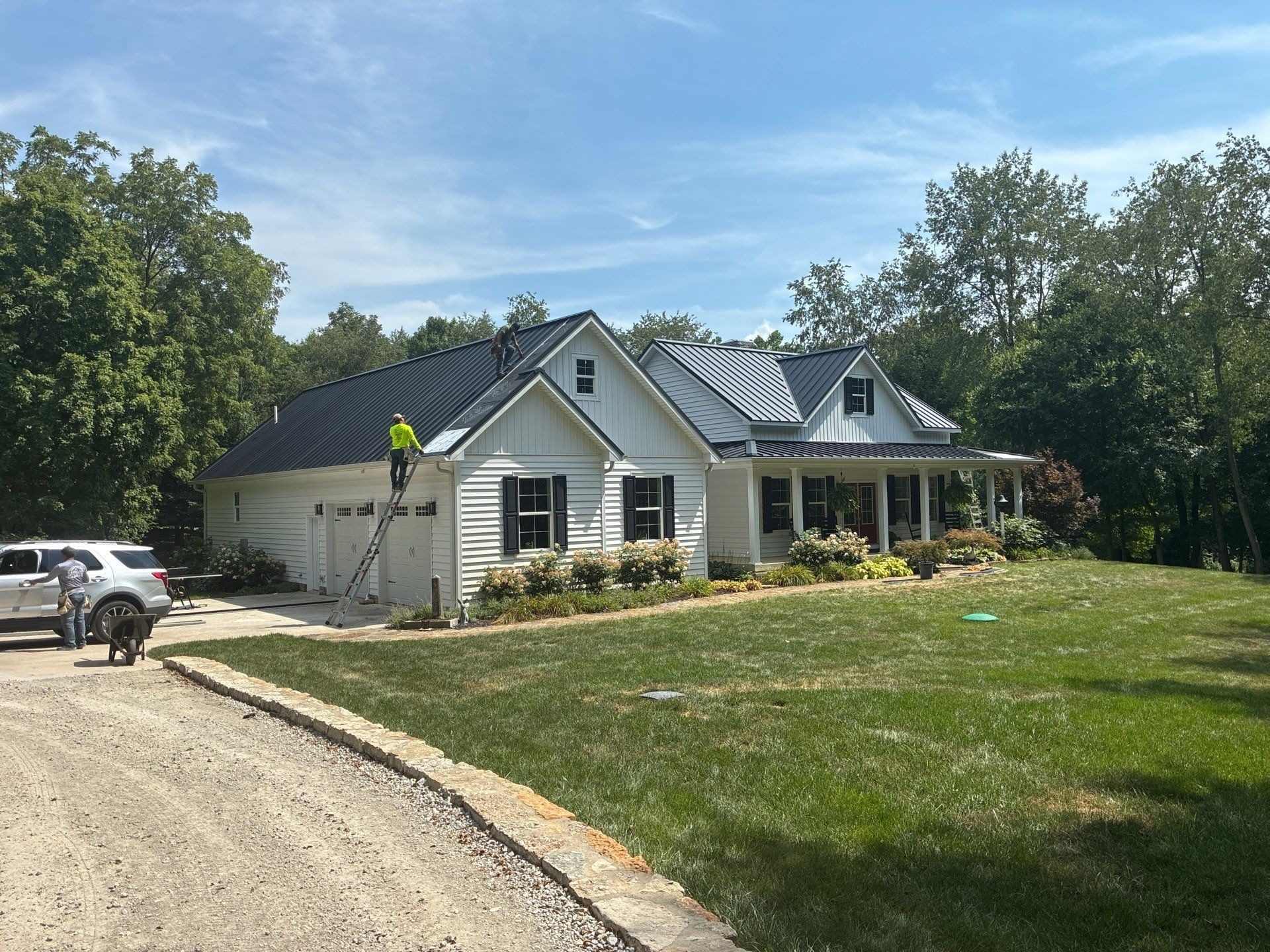
- Job: Residential re-roof, TuffRib metal tear-off to snap lock standing seam metal
- Roof system: 26-gauge 1.5-inch snap lock standing seam with clips, Textured Black
- Replaced: Existing TuffRib metal roof (tear-off)
- Completed: July 2026
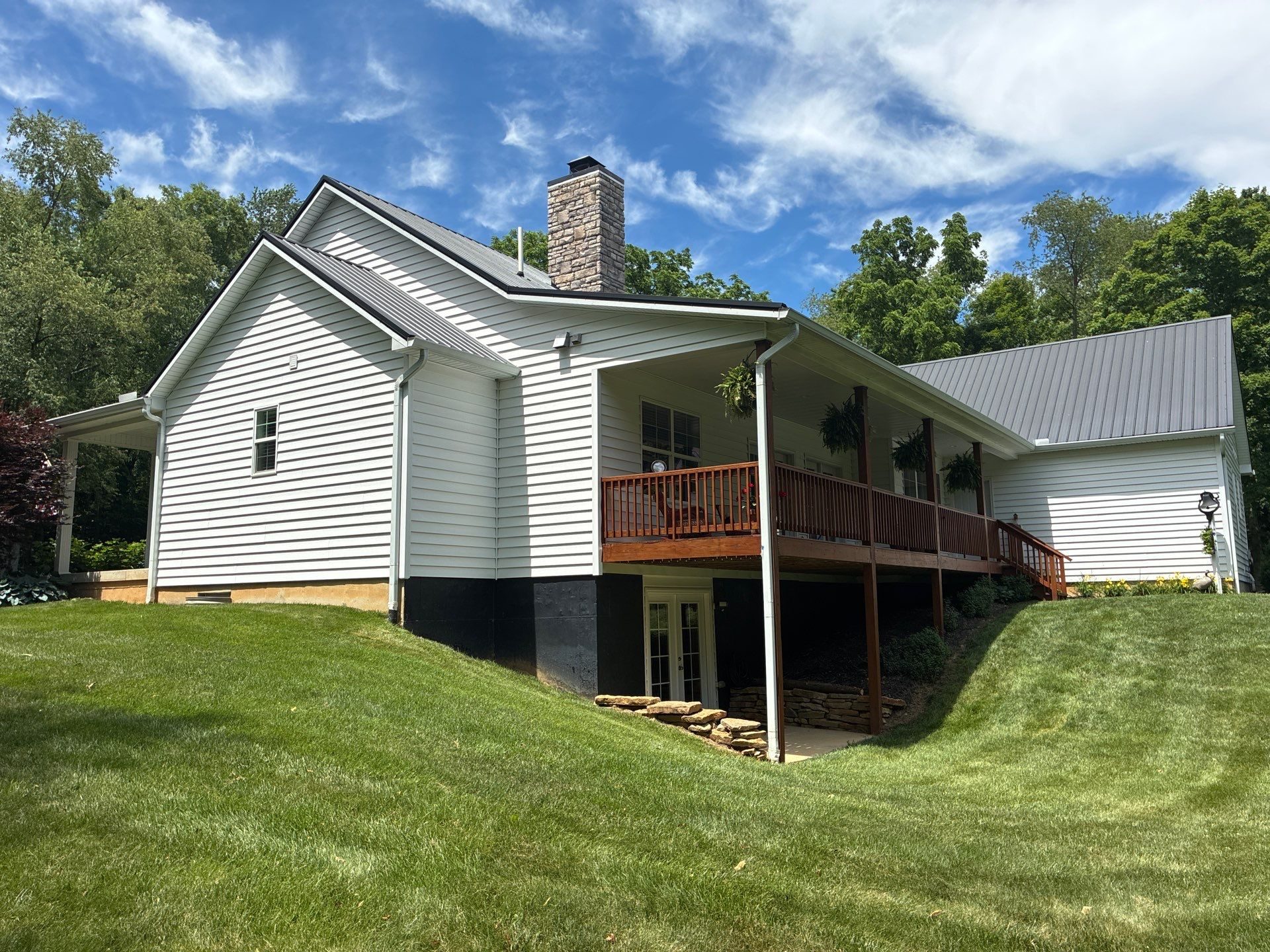
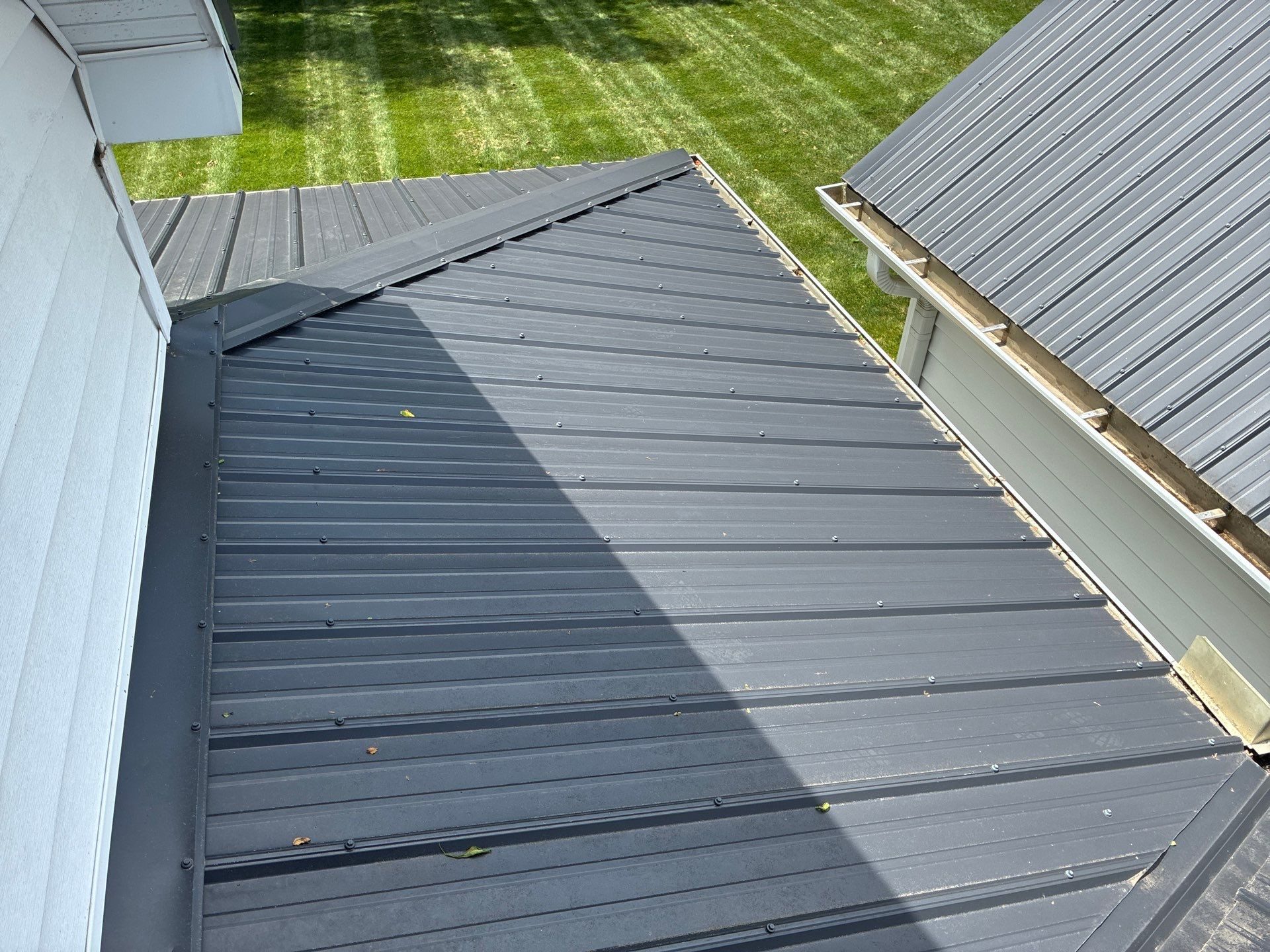
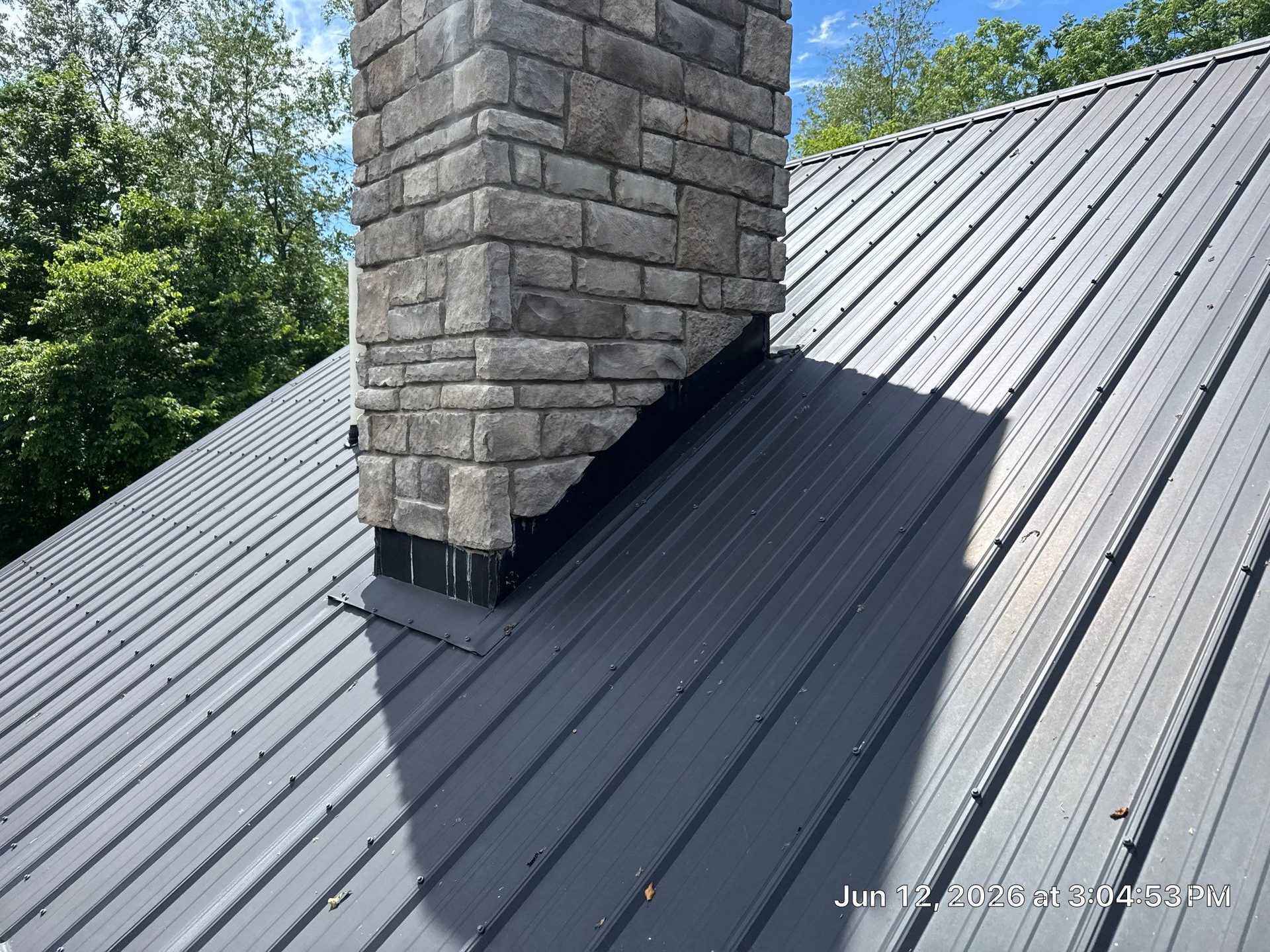
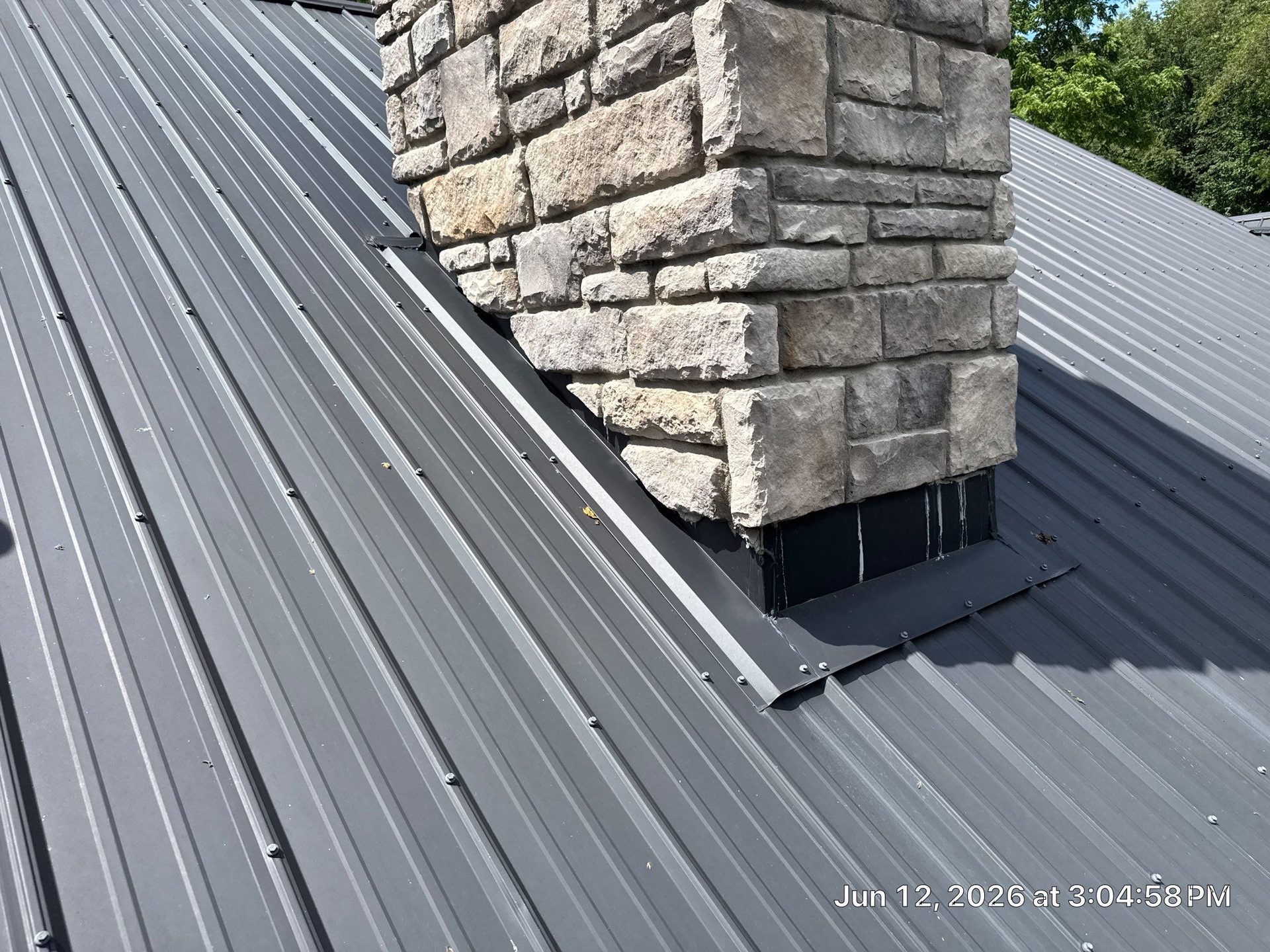
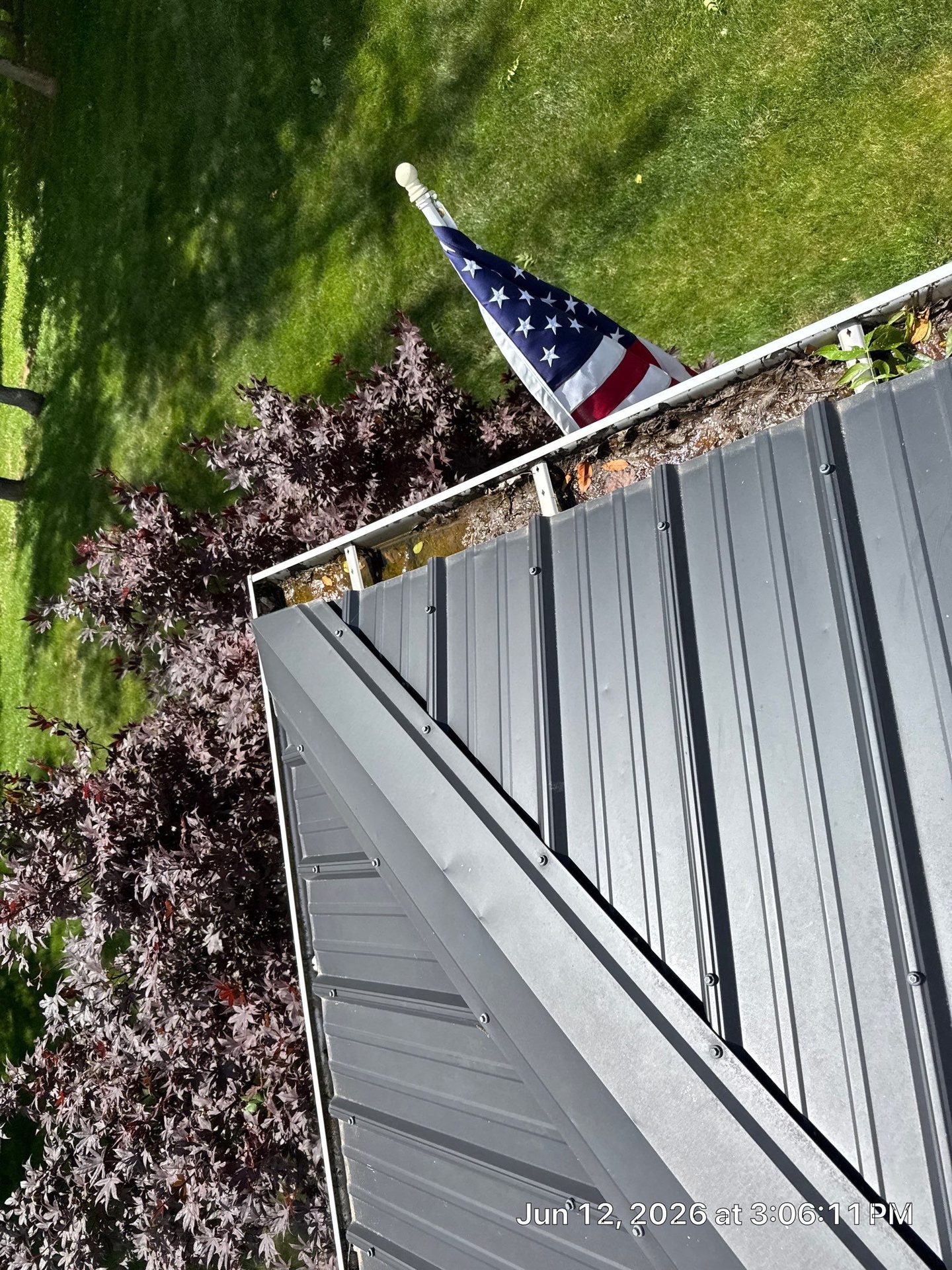
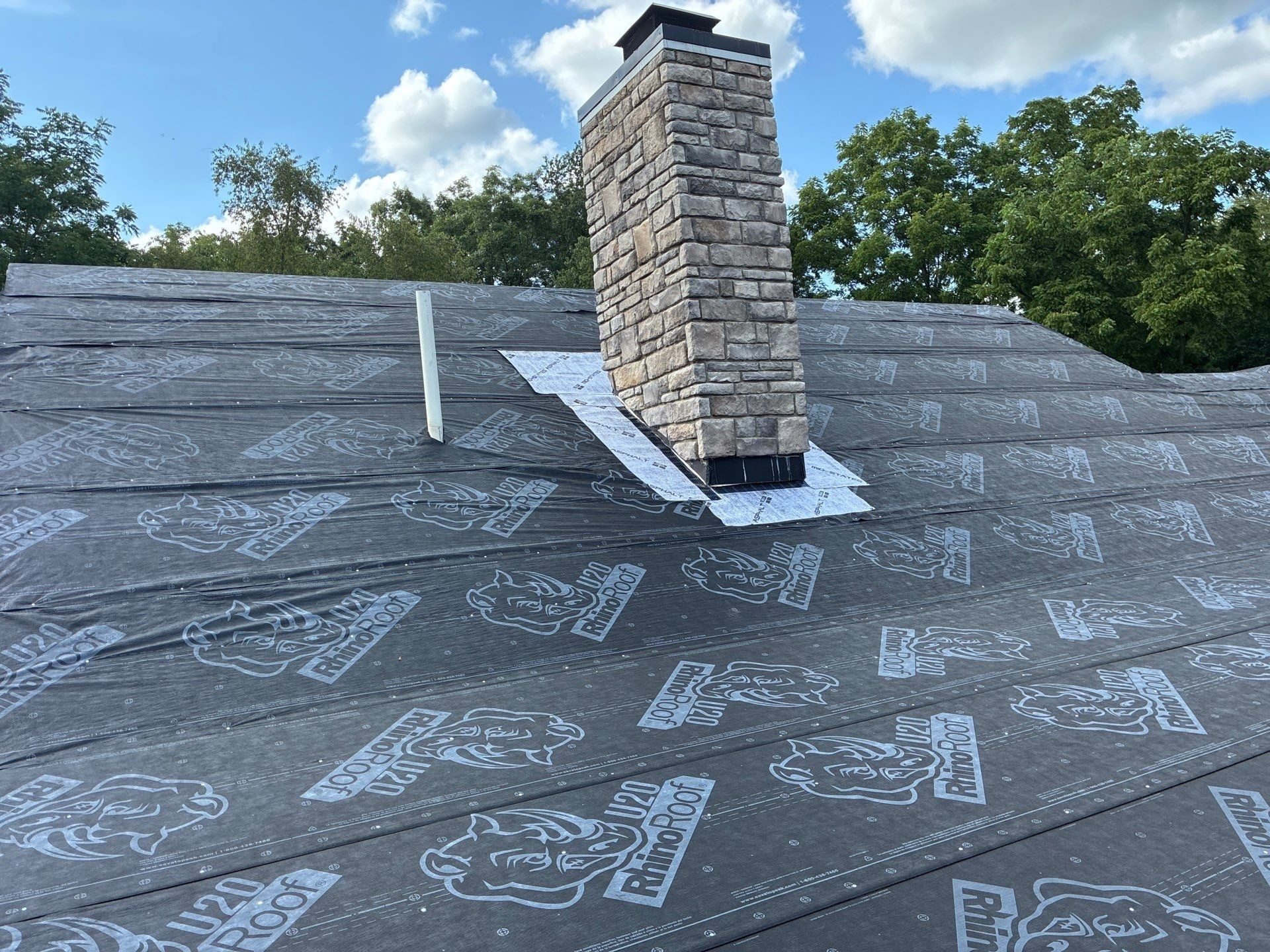
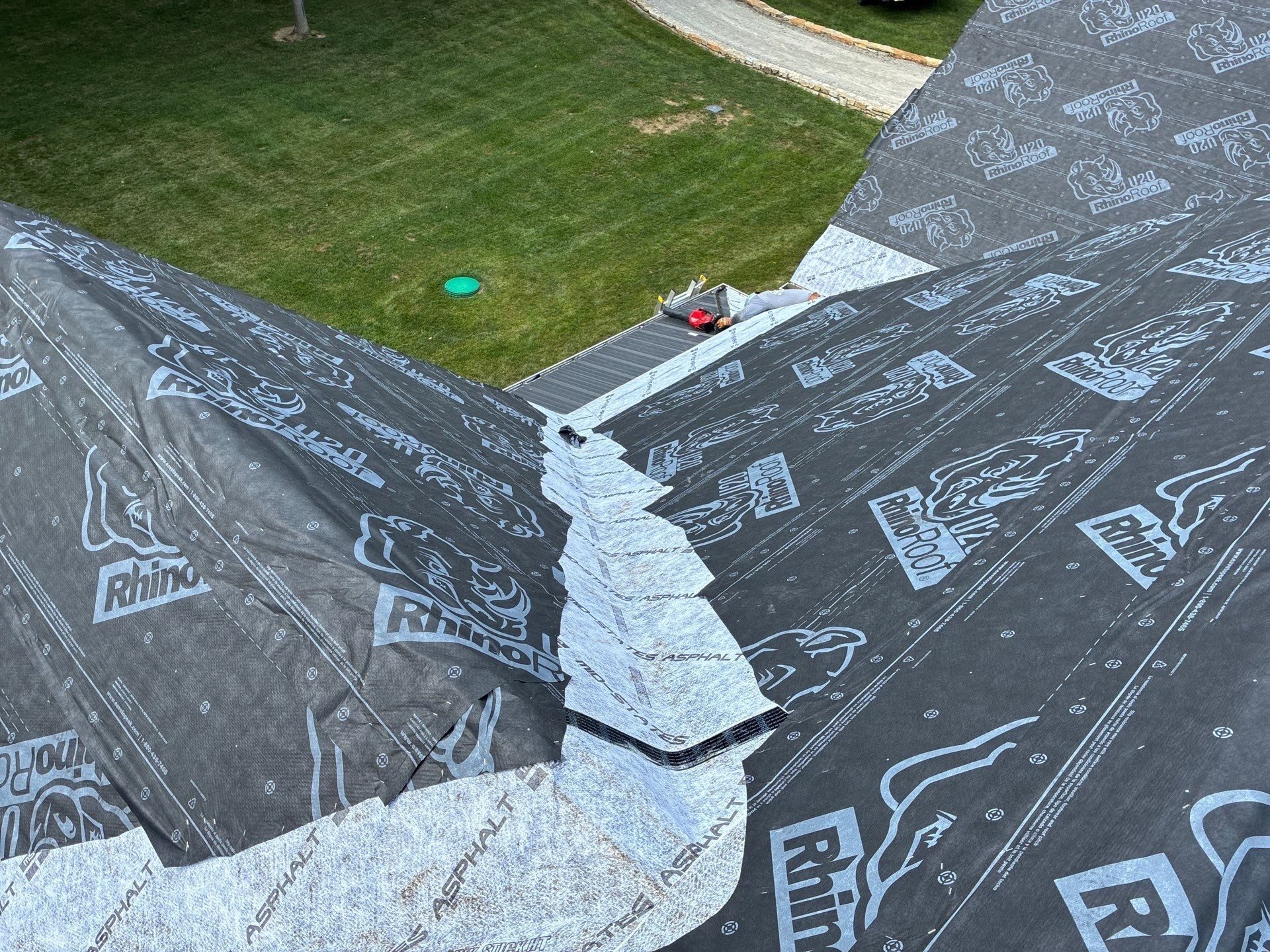
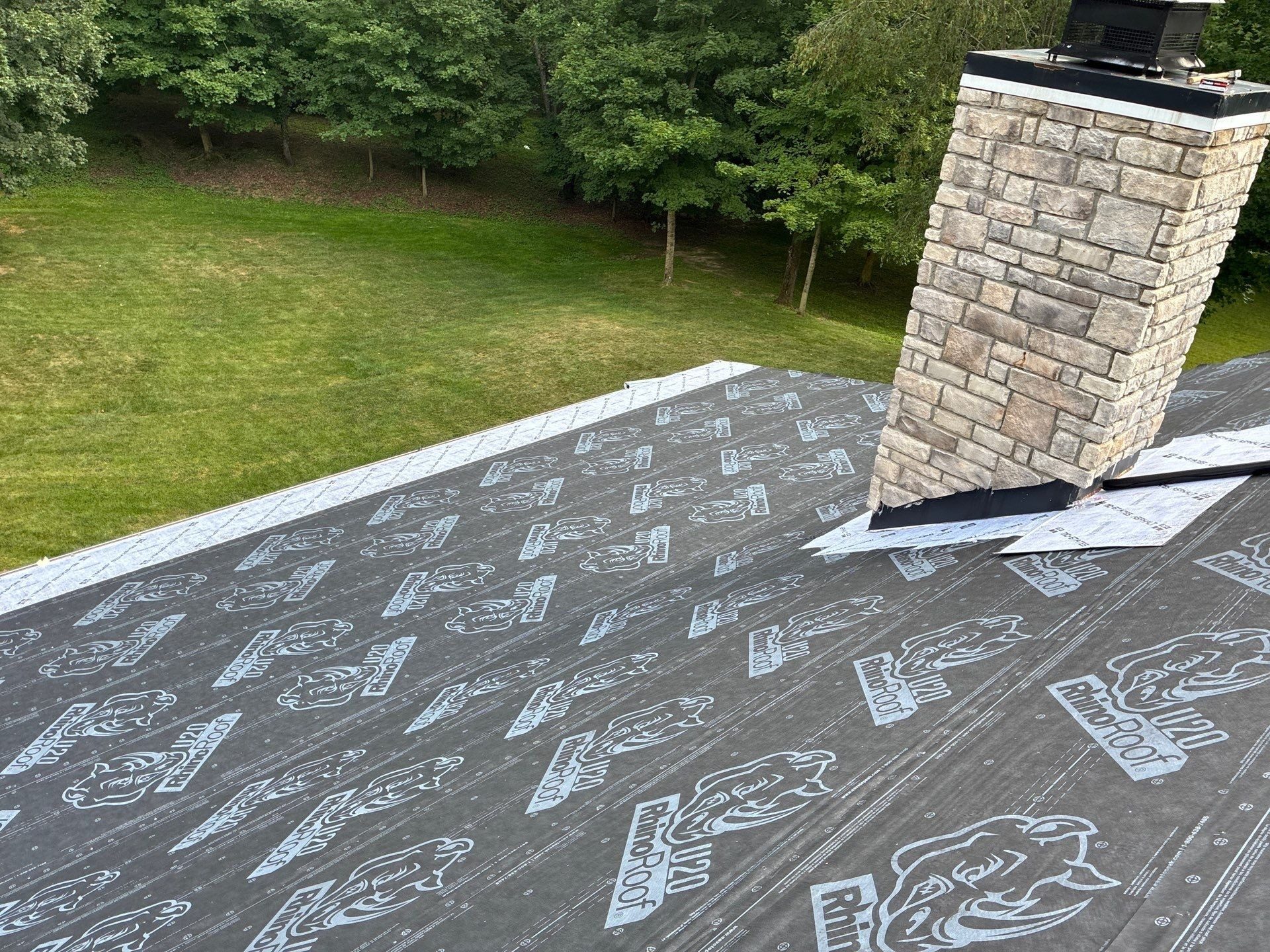
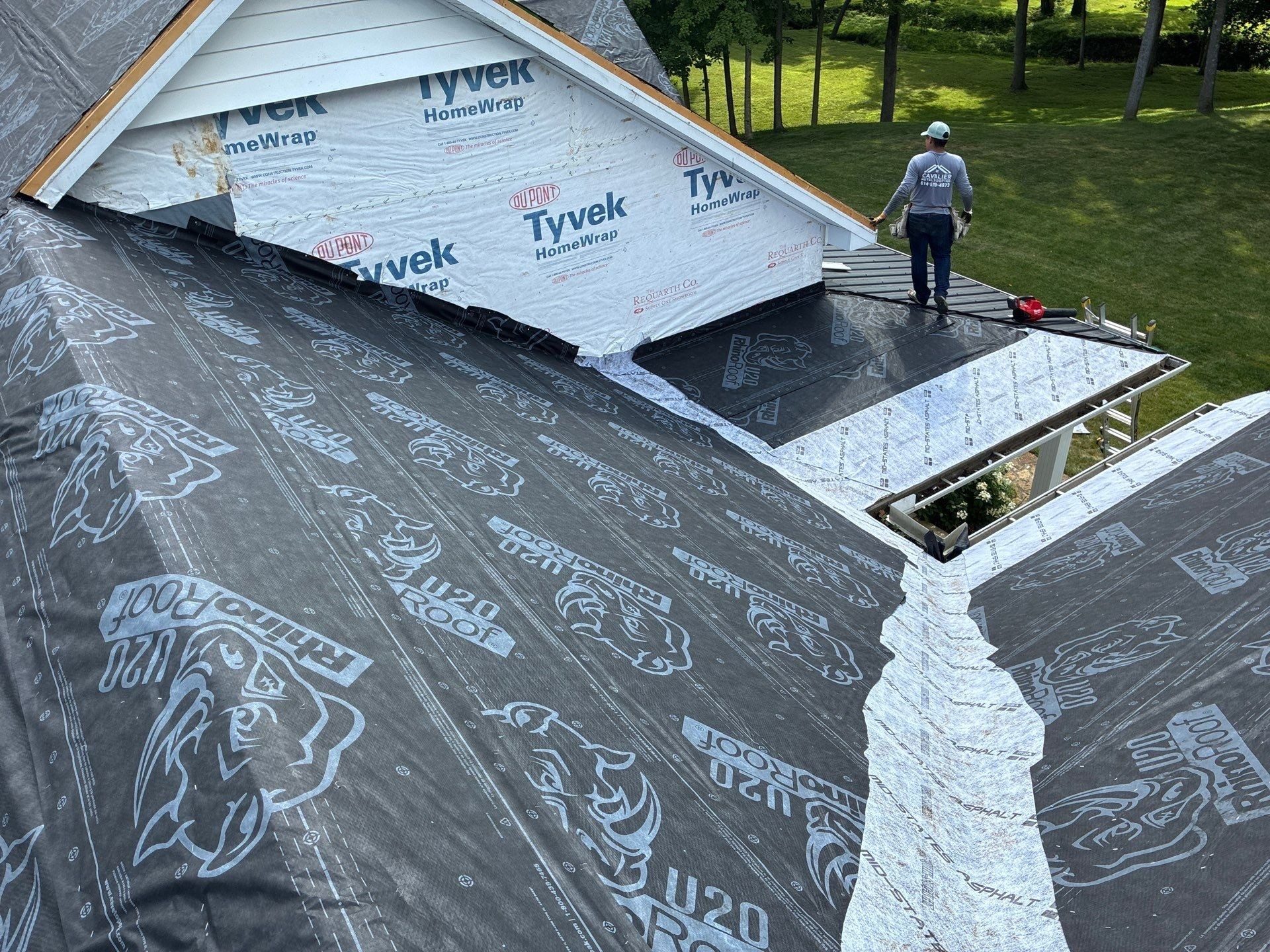
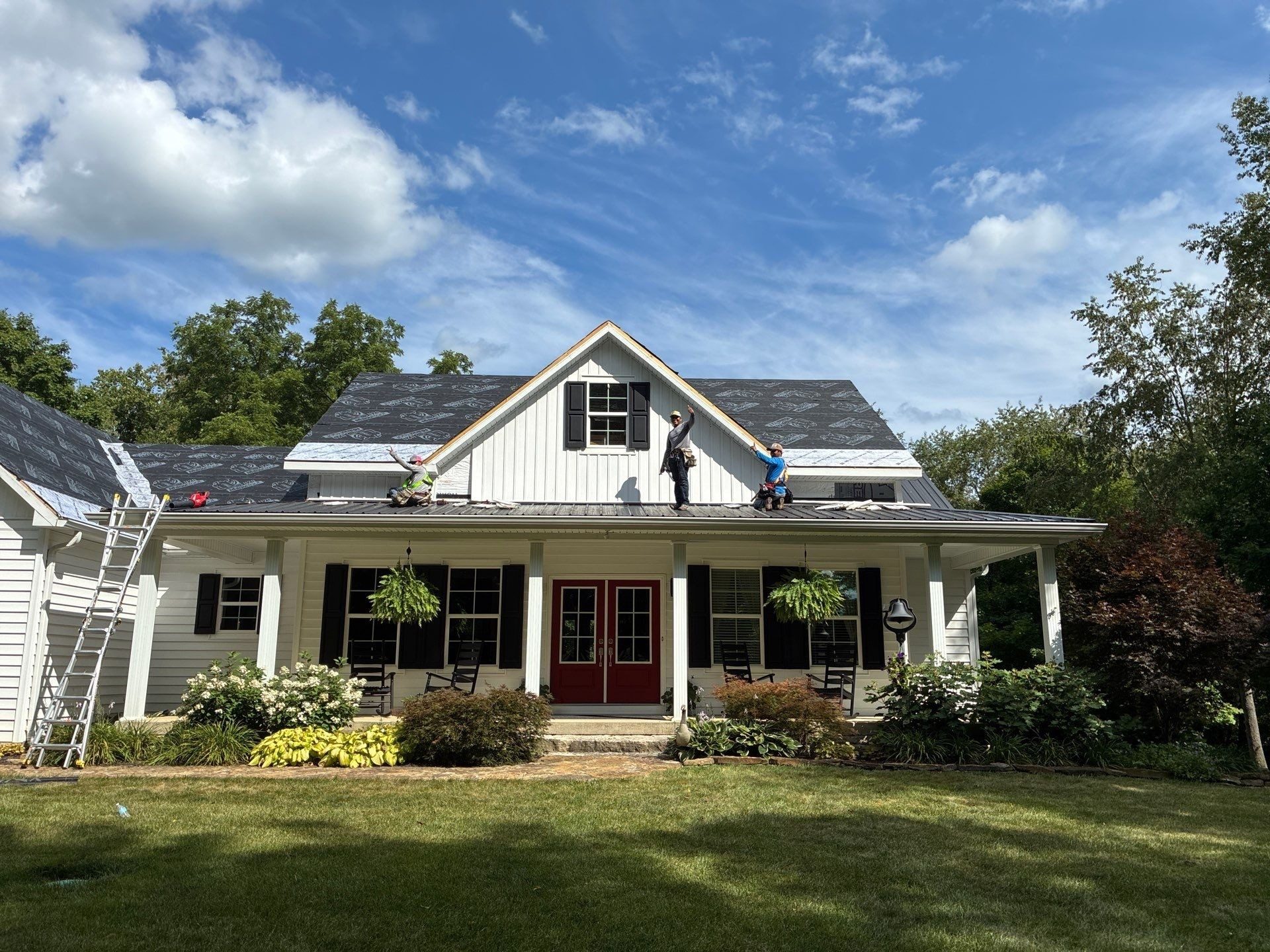
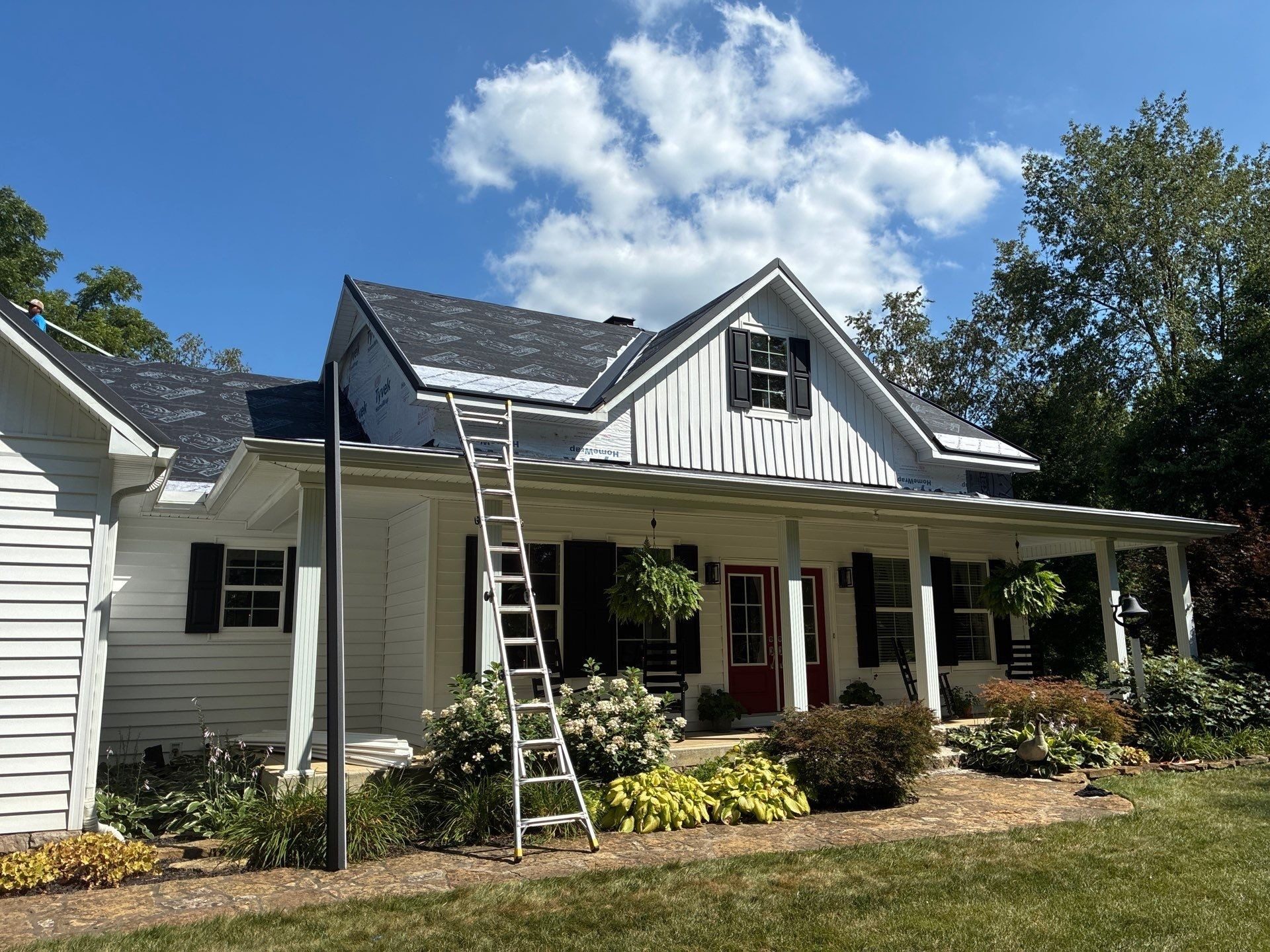
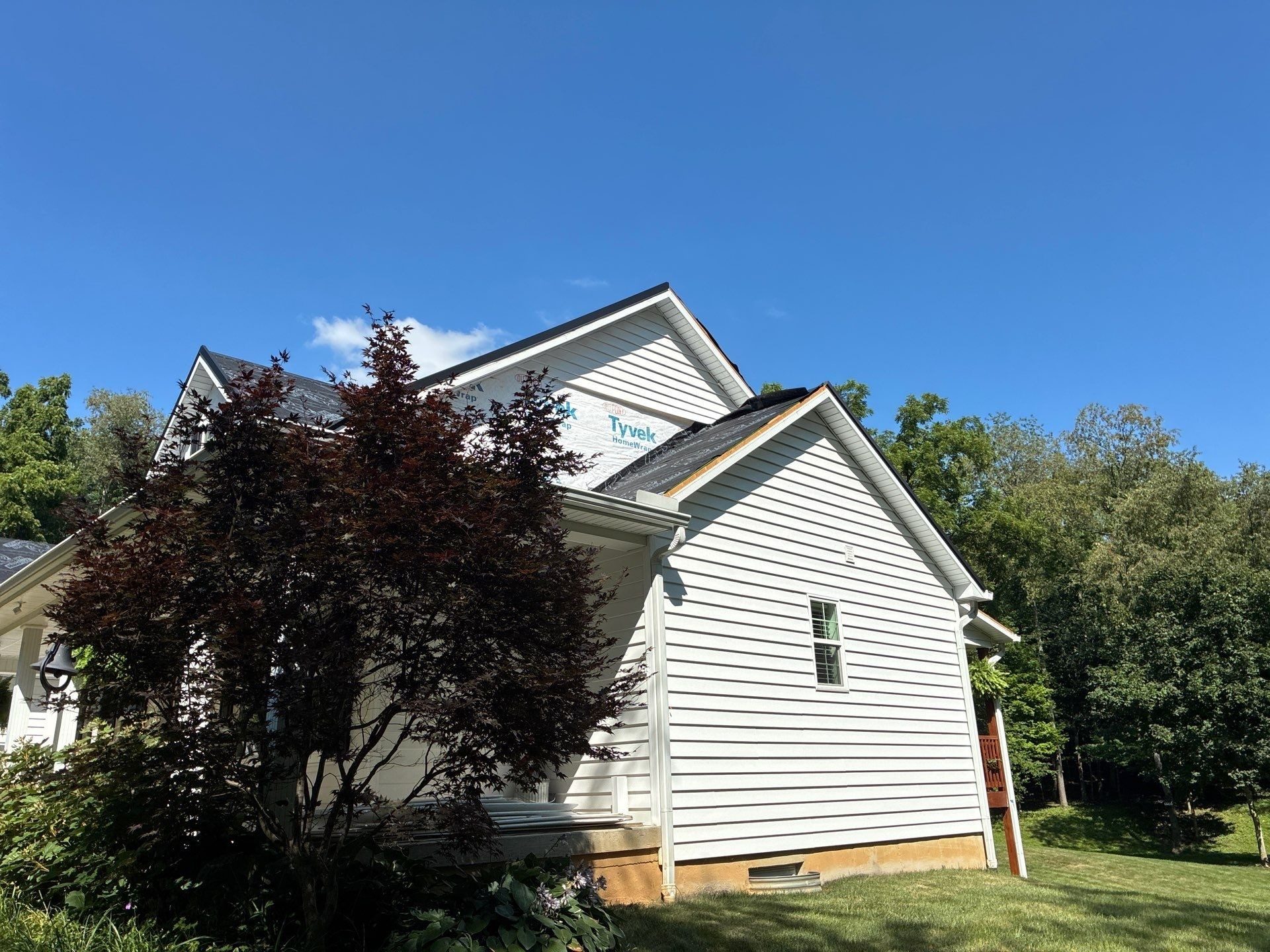
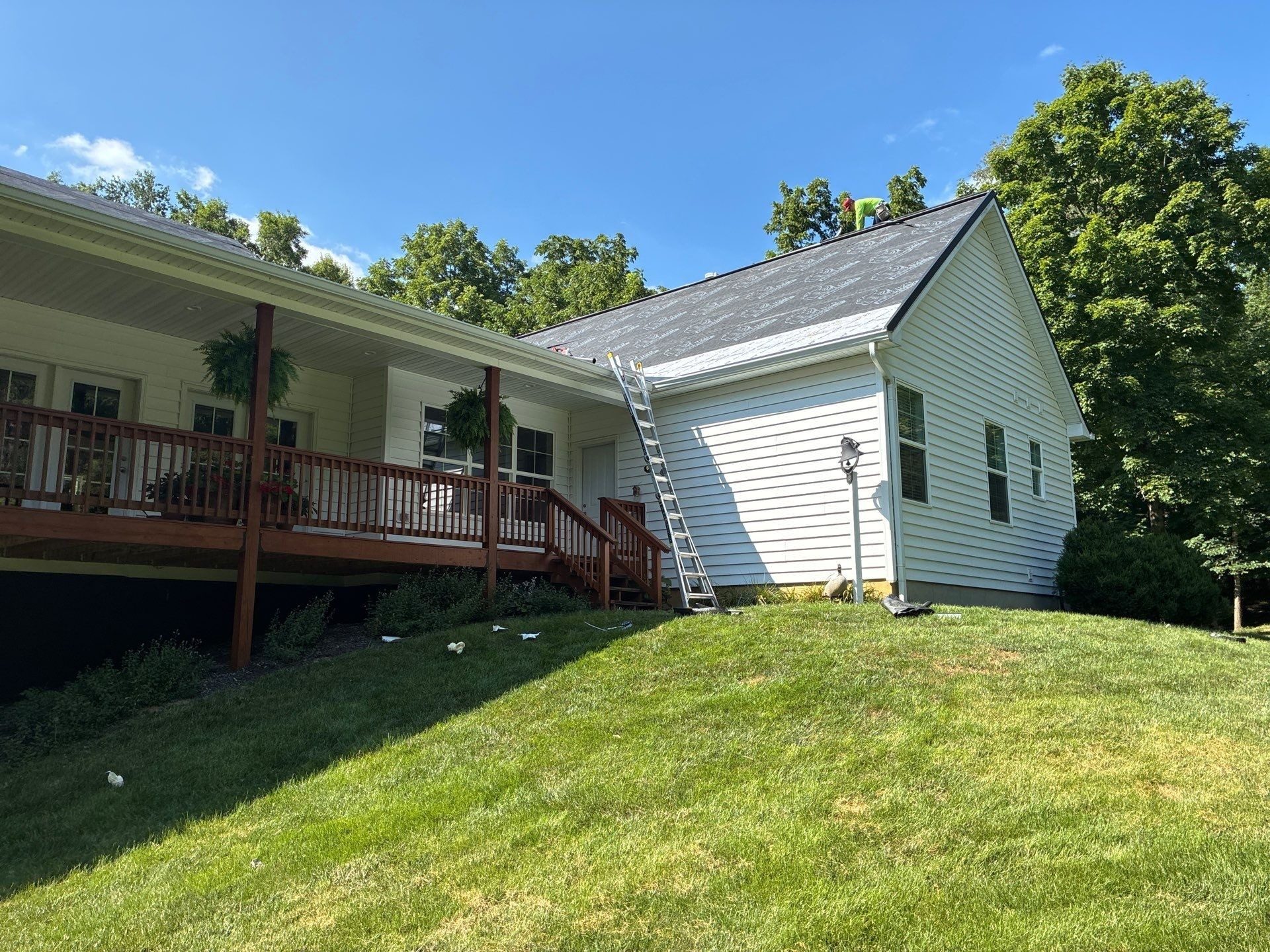
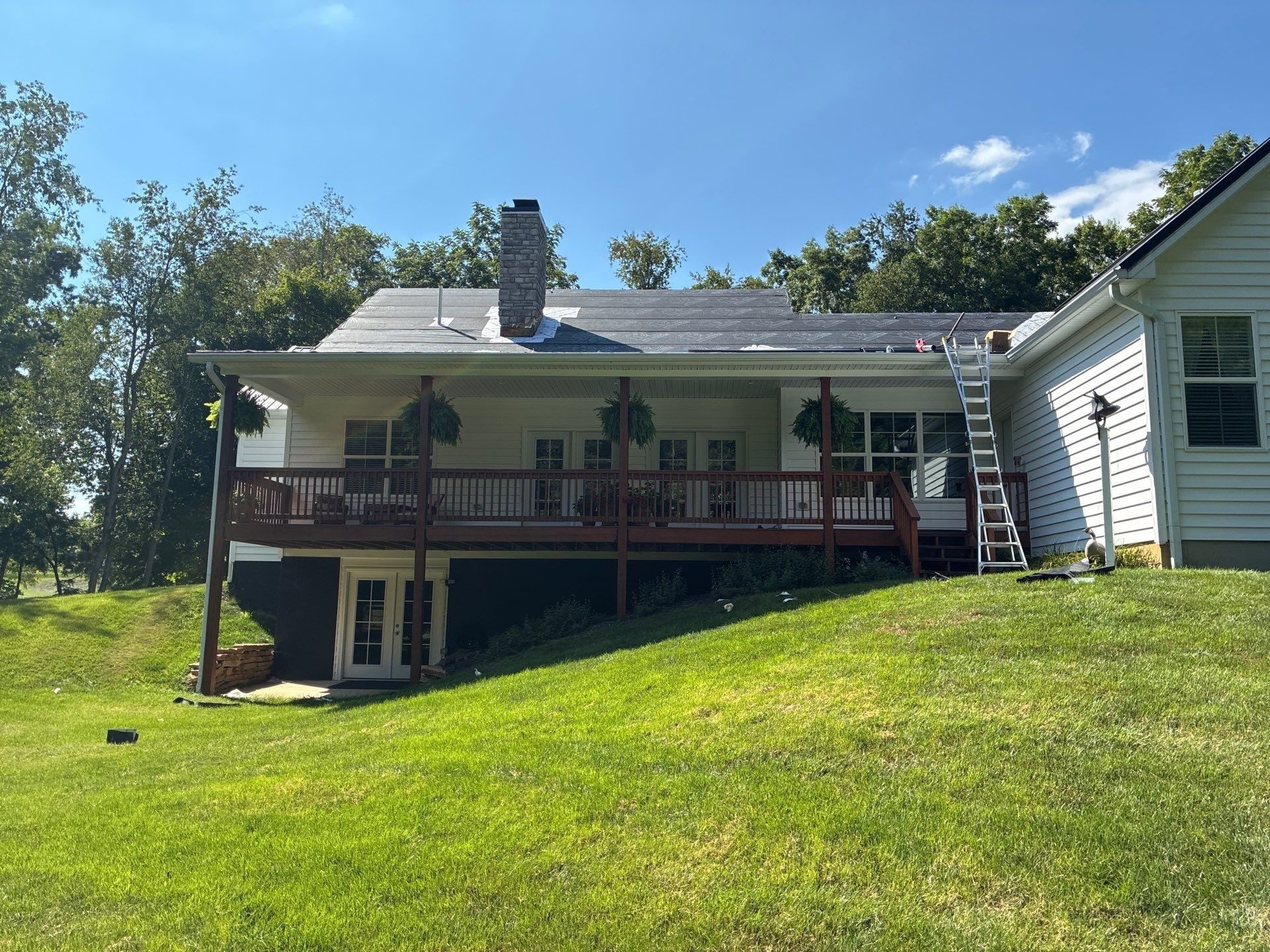
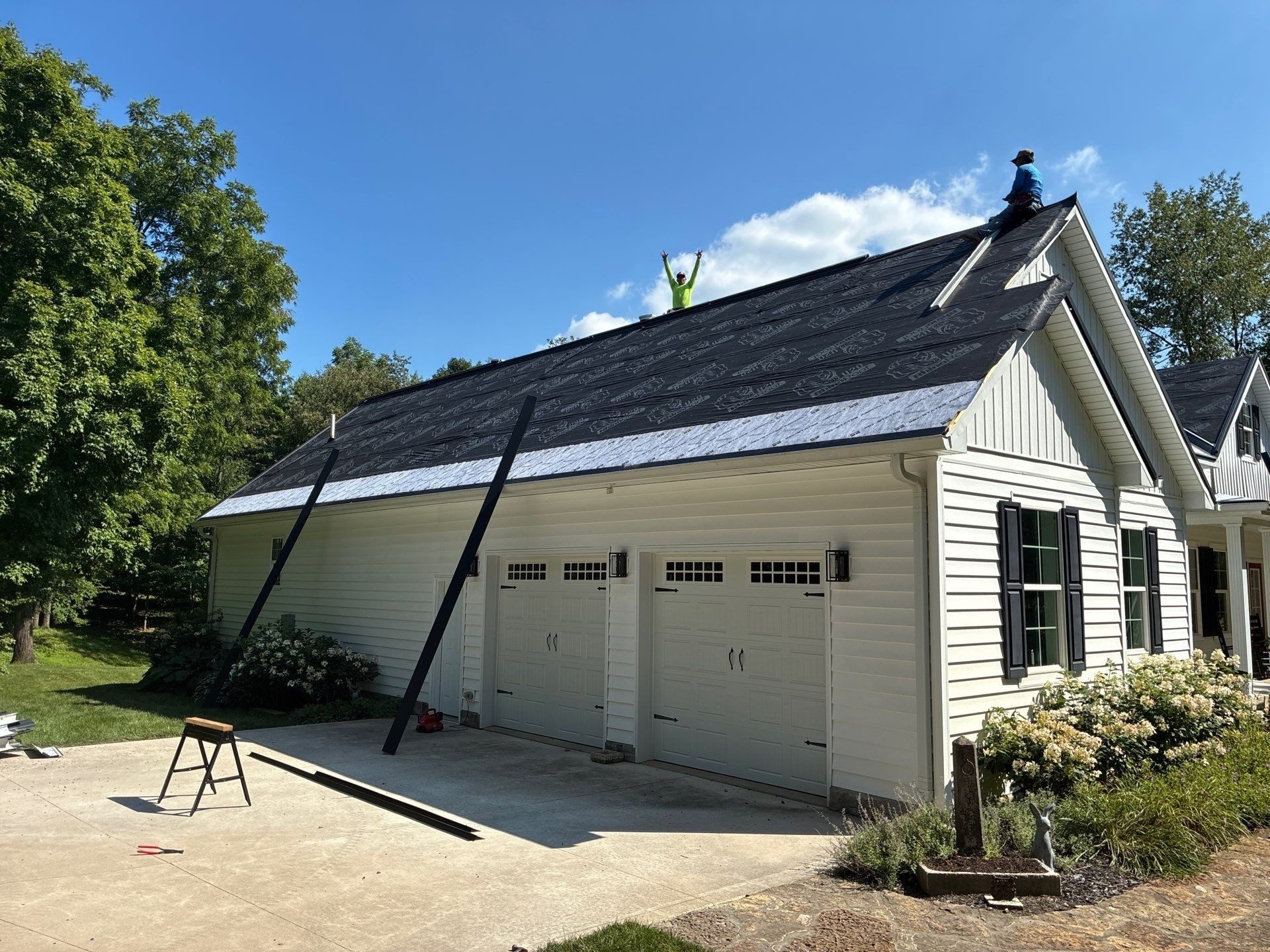
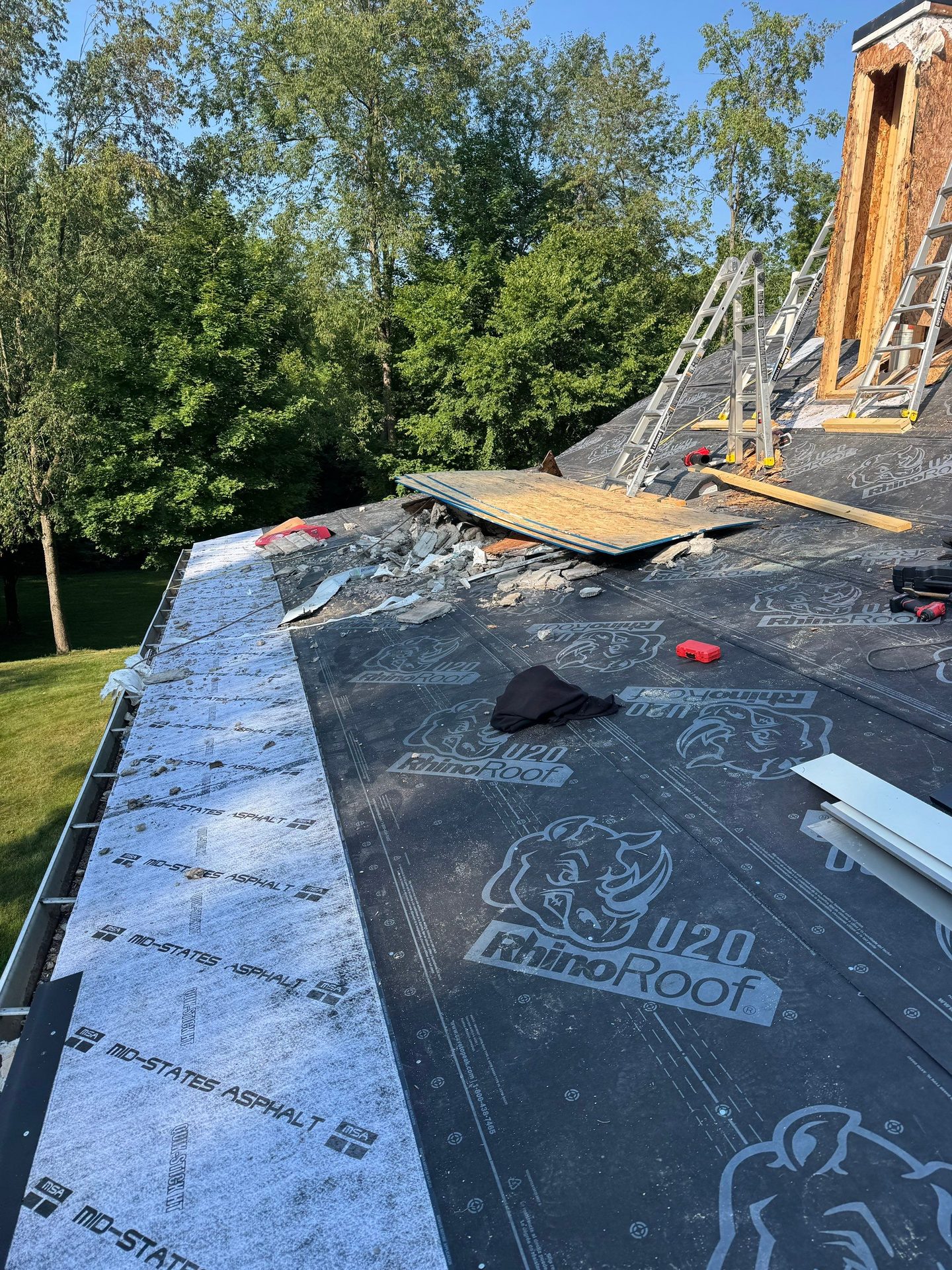
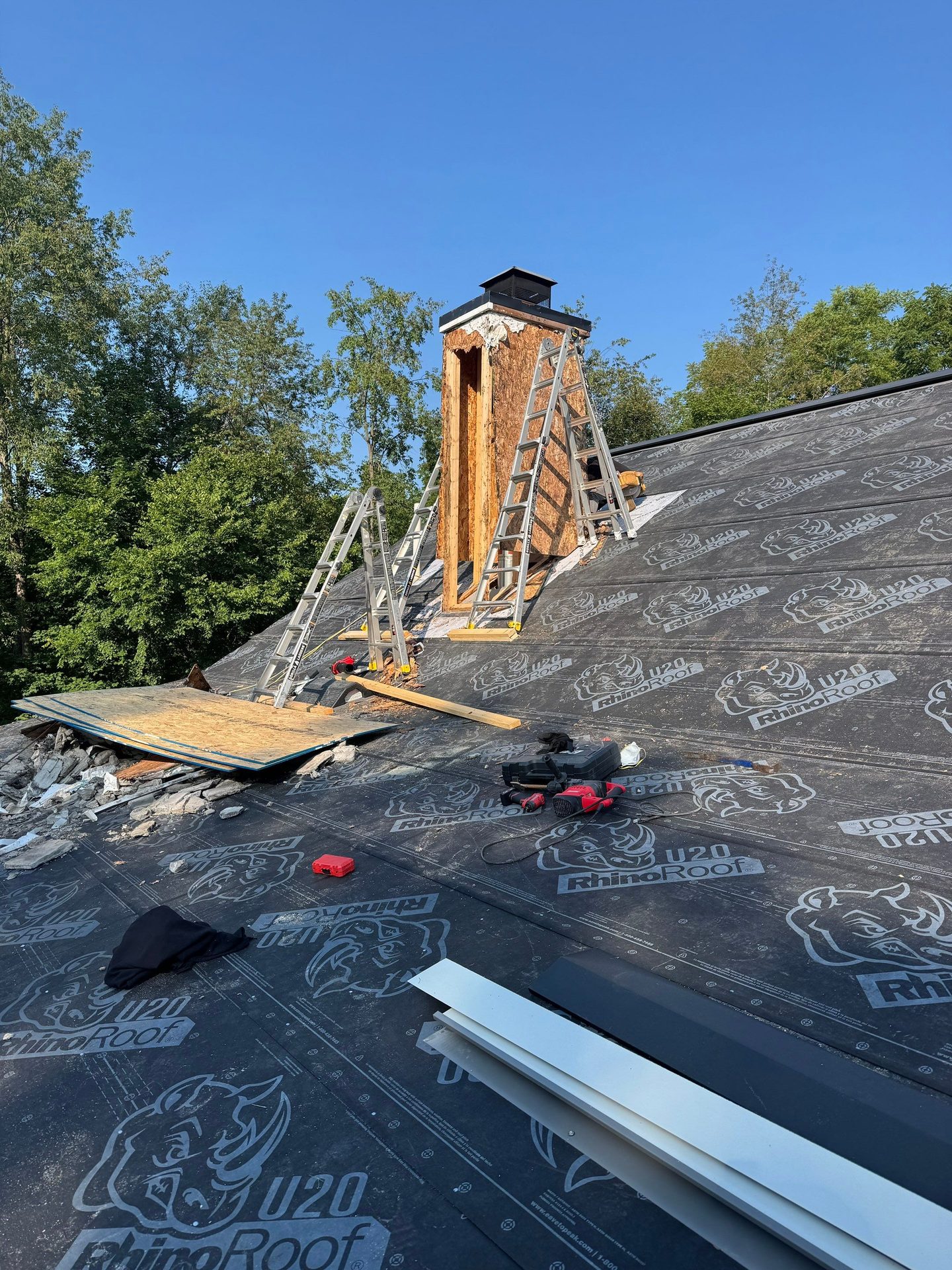
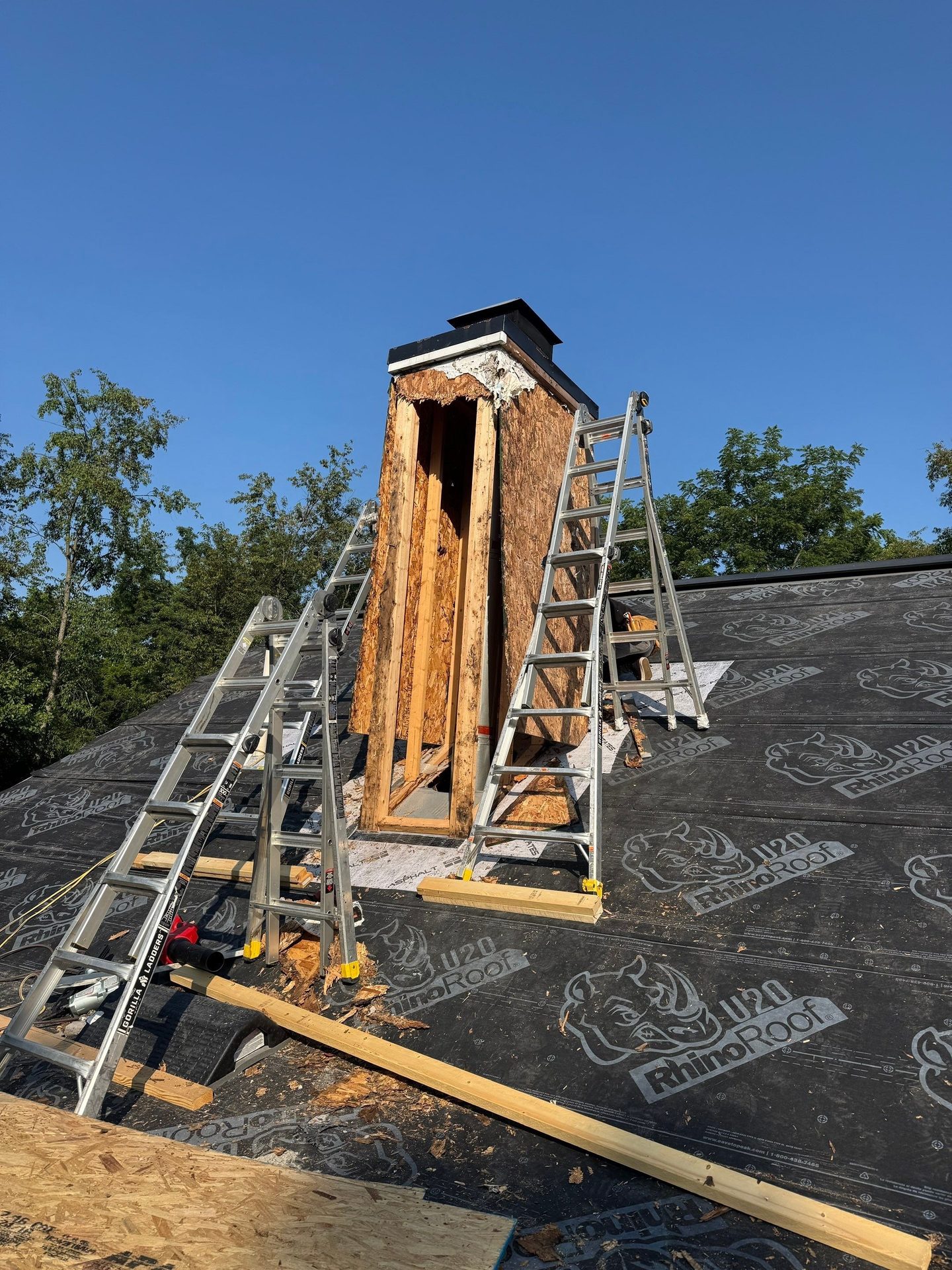
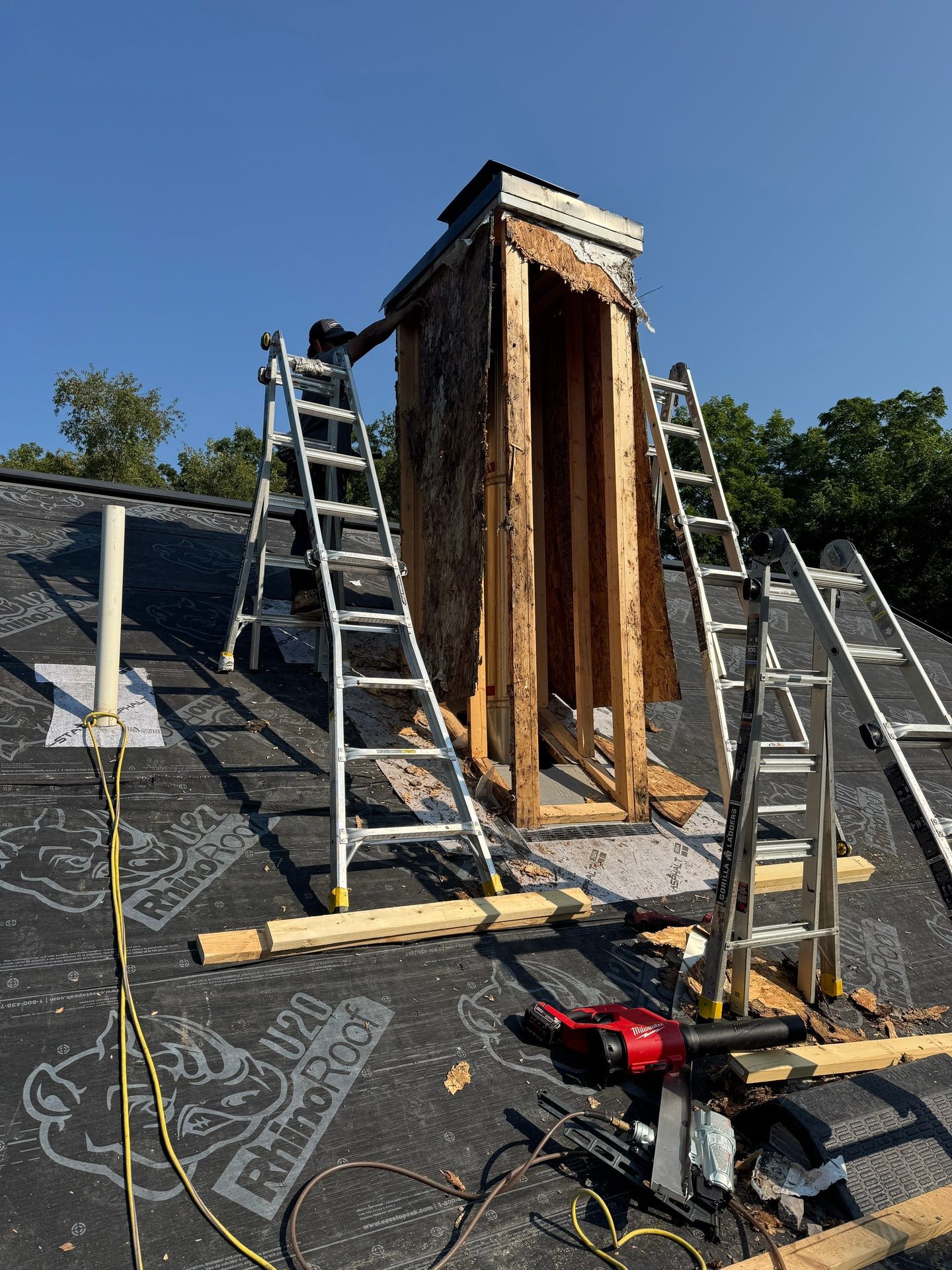
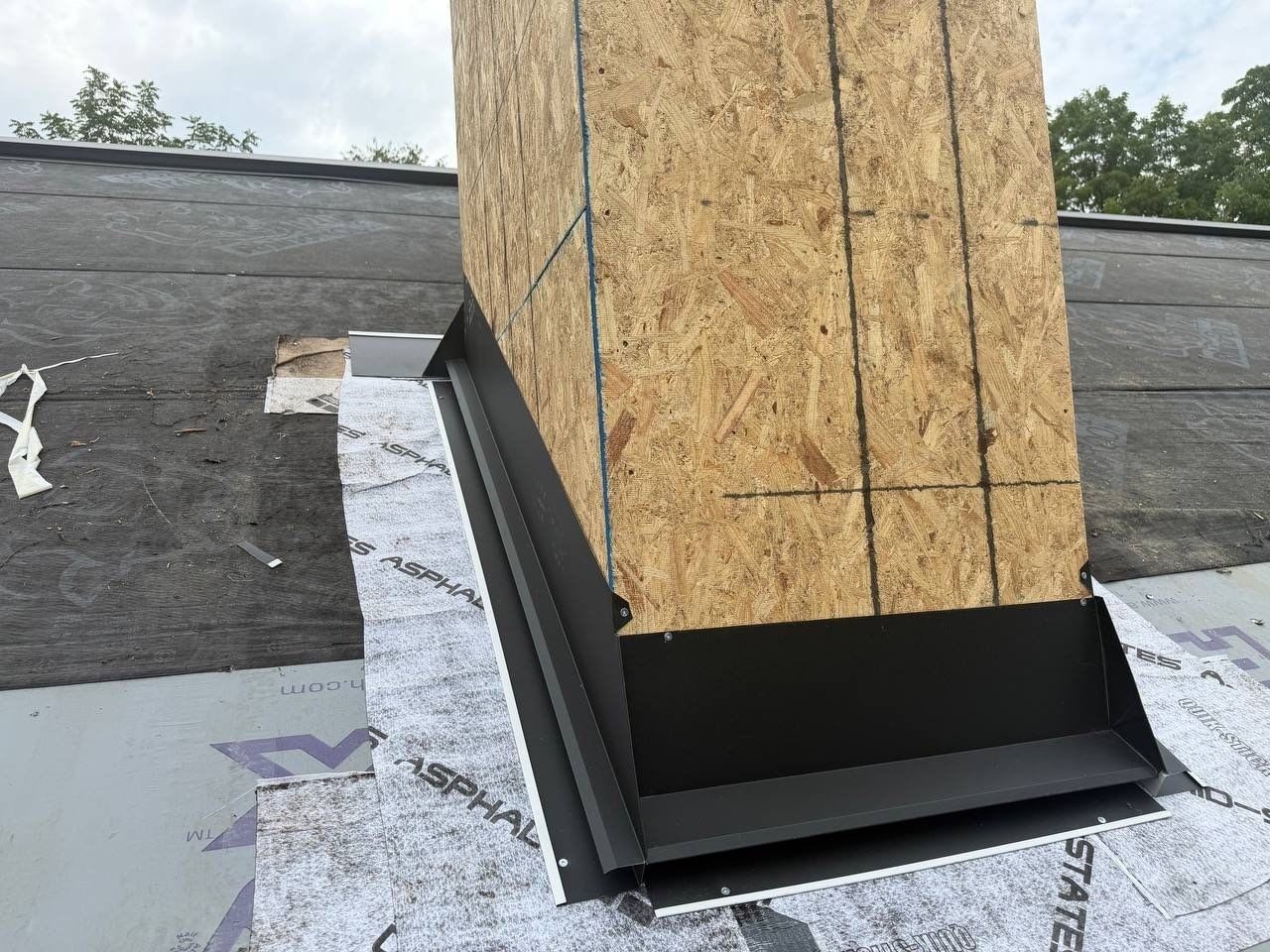
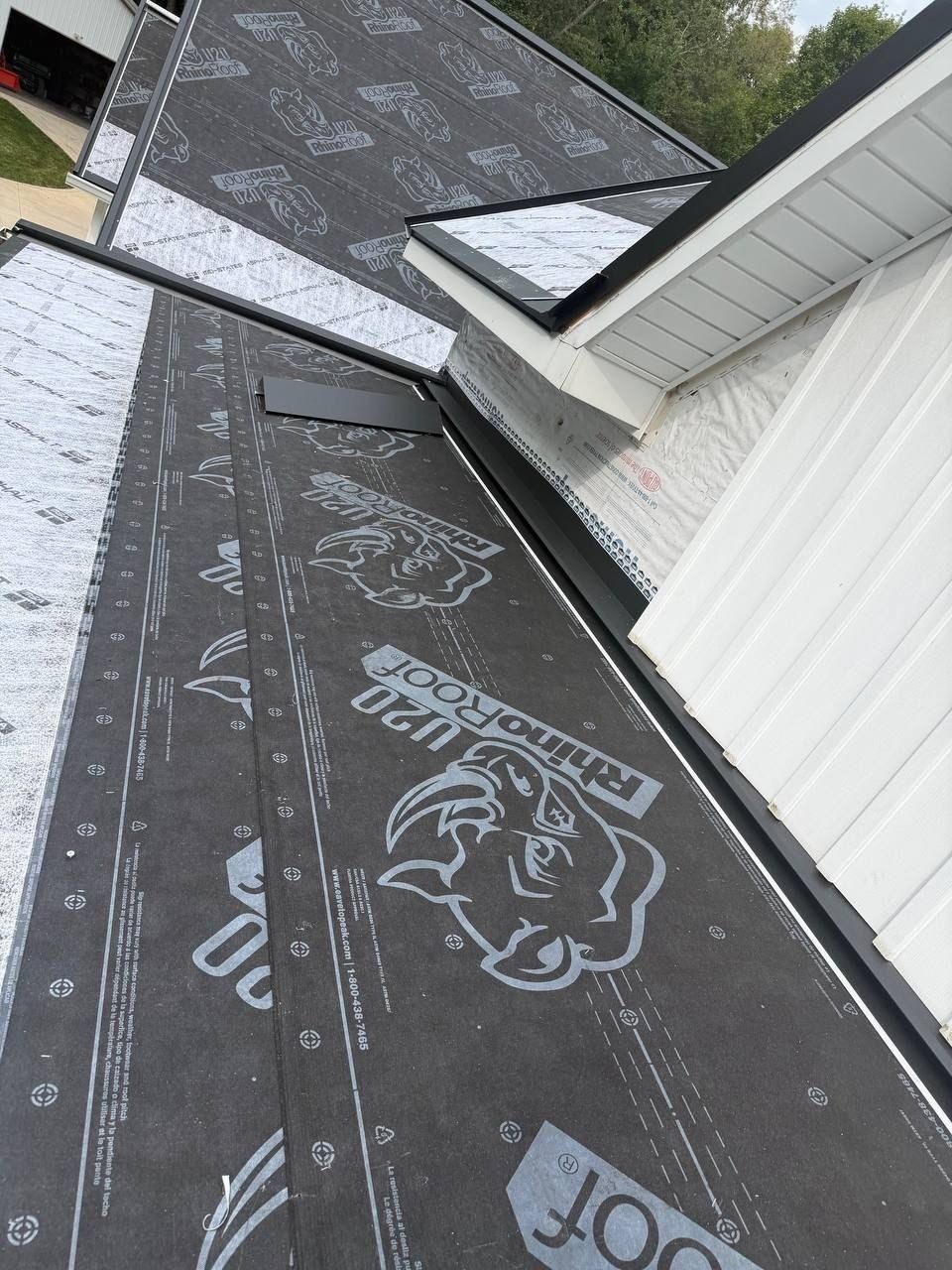
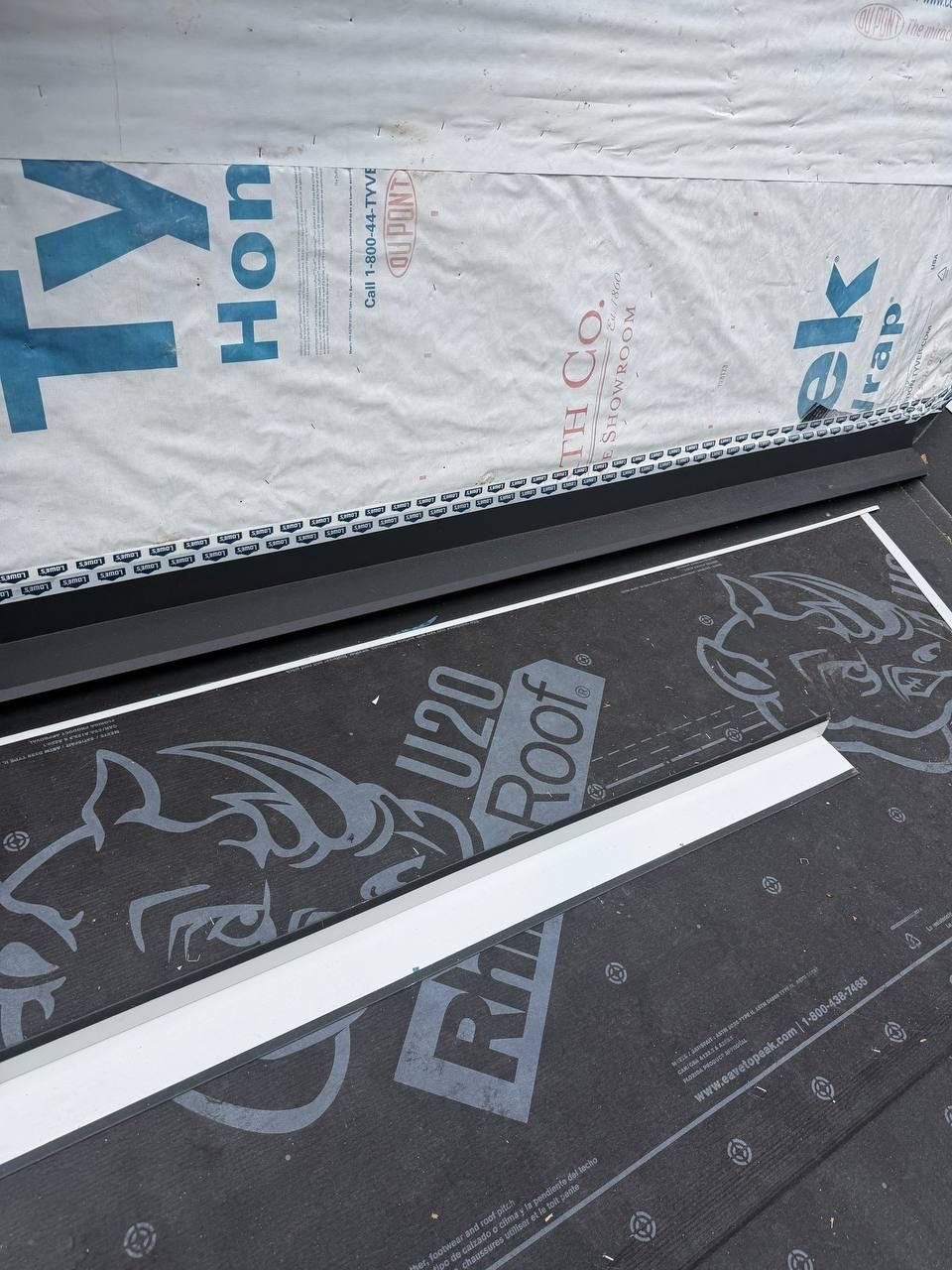
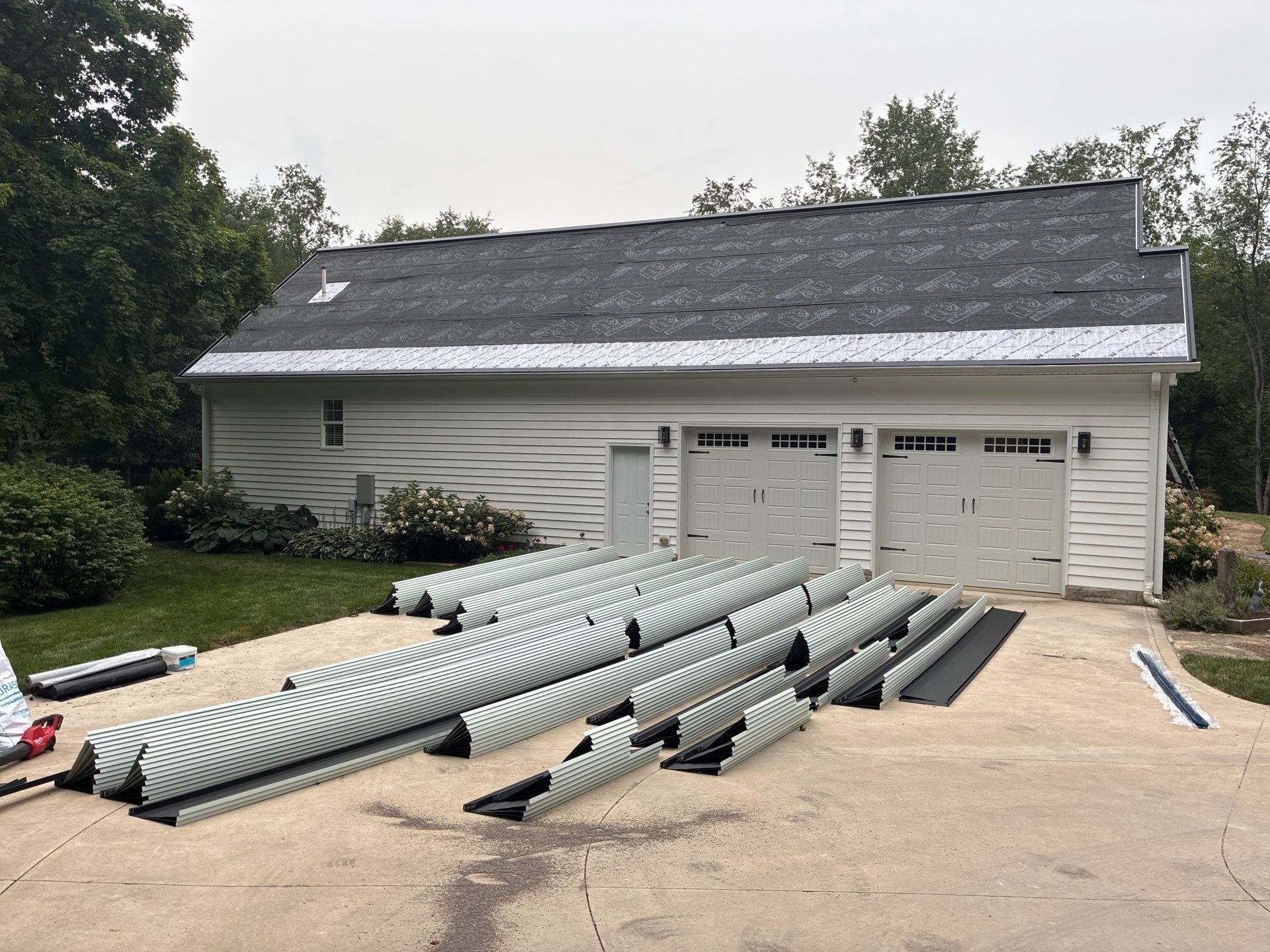
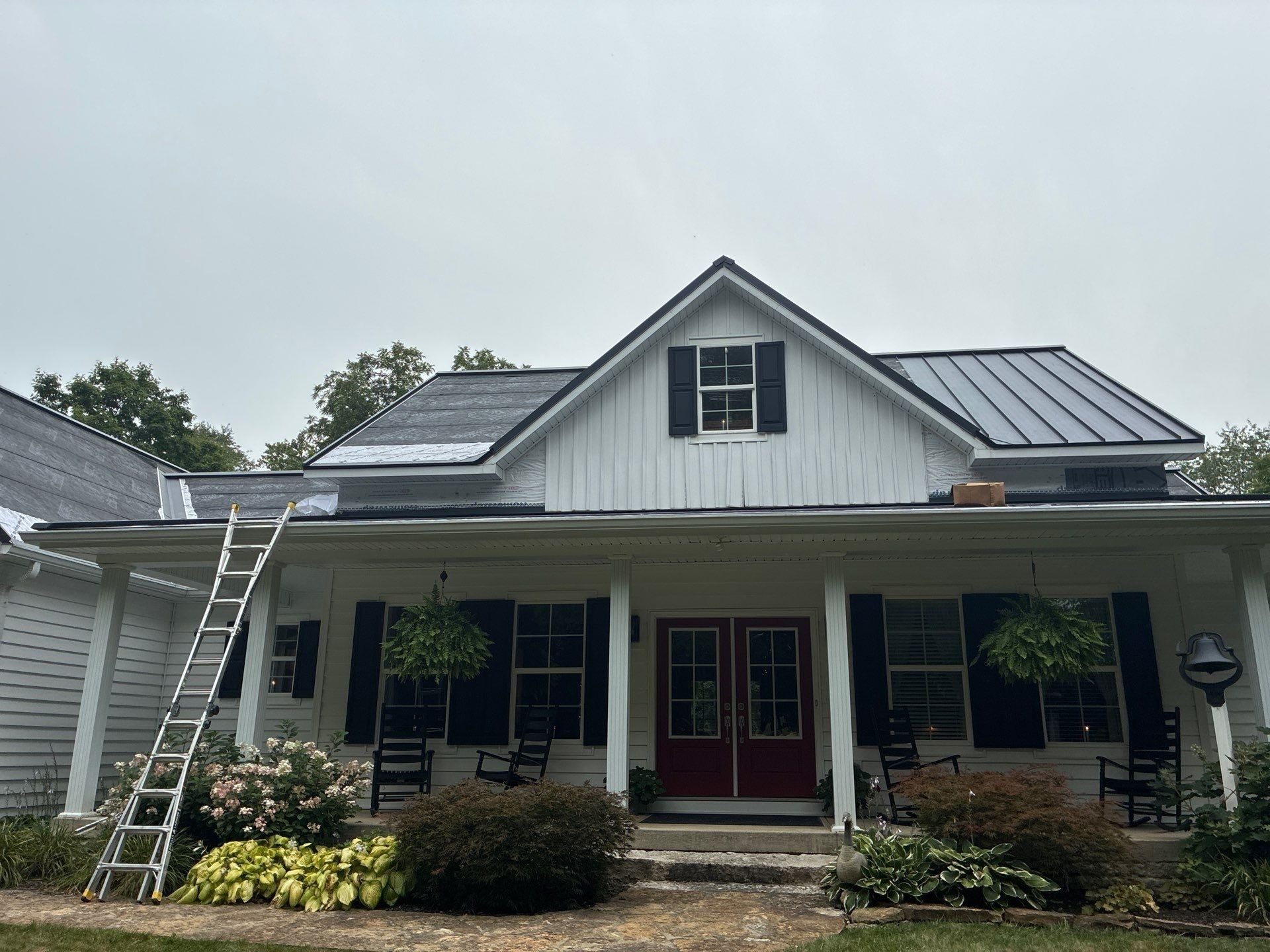
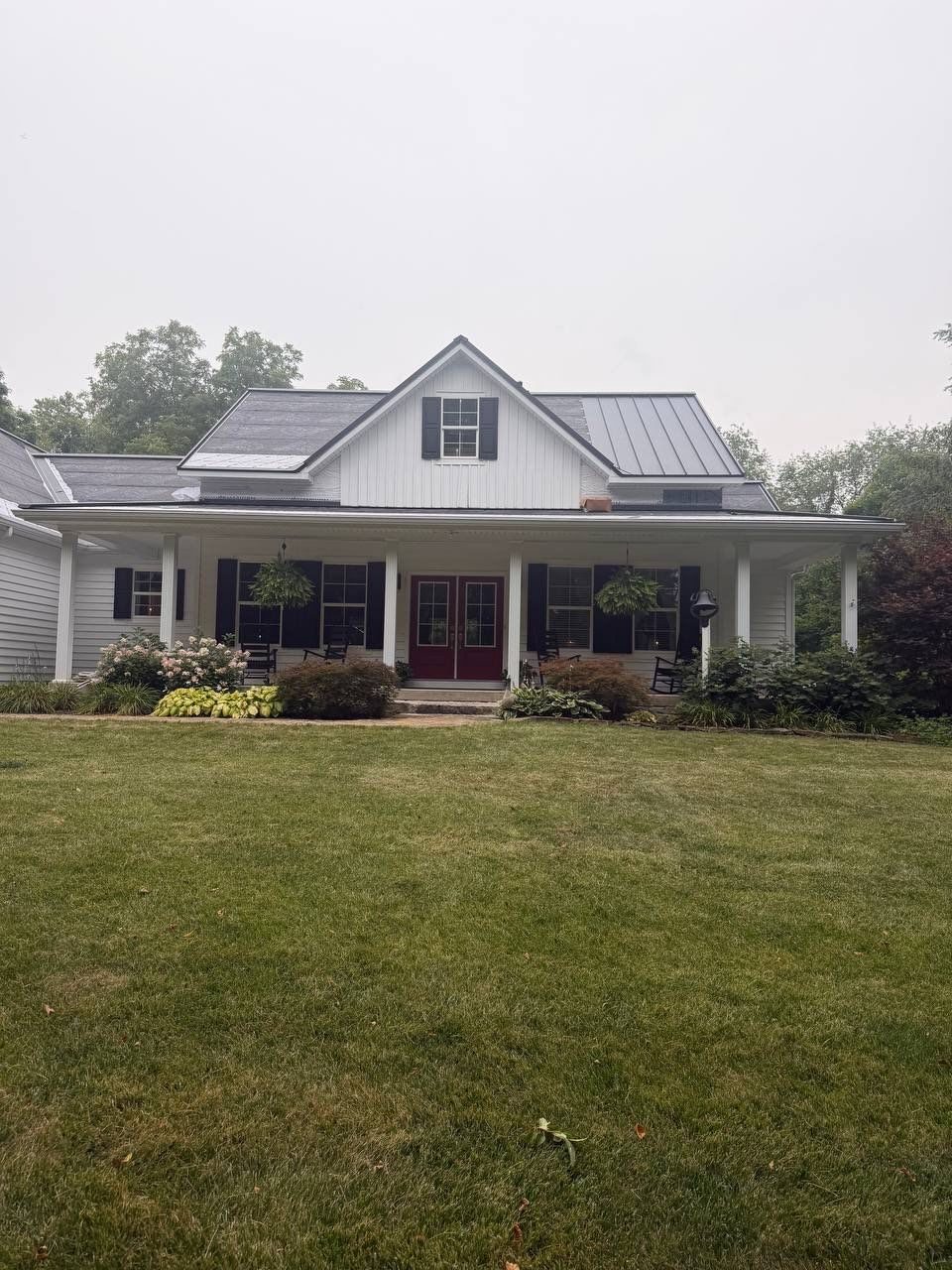
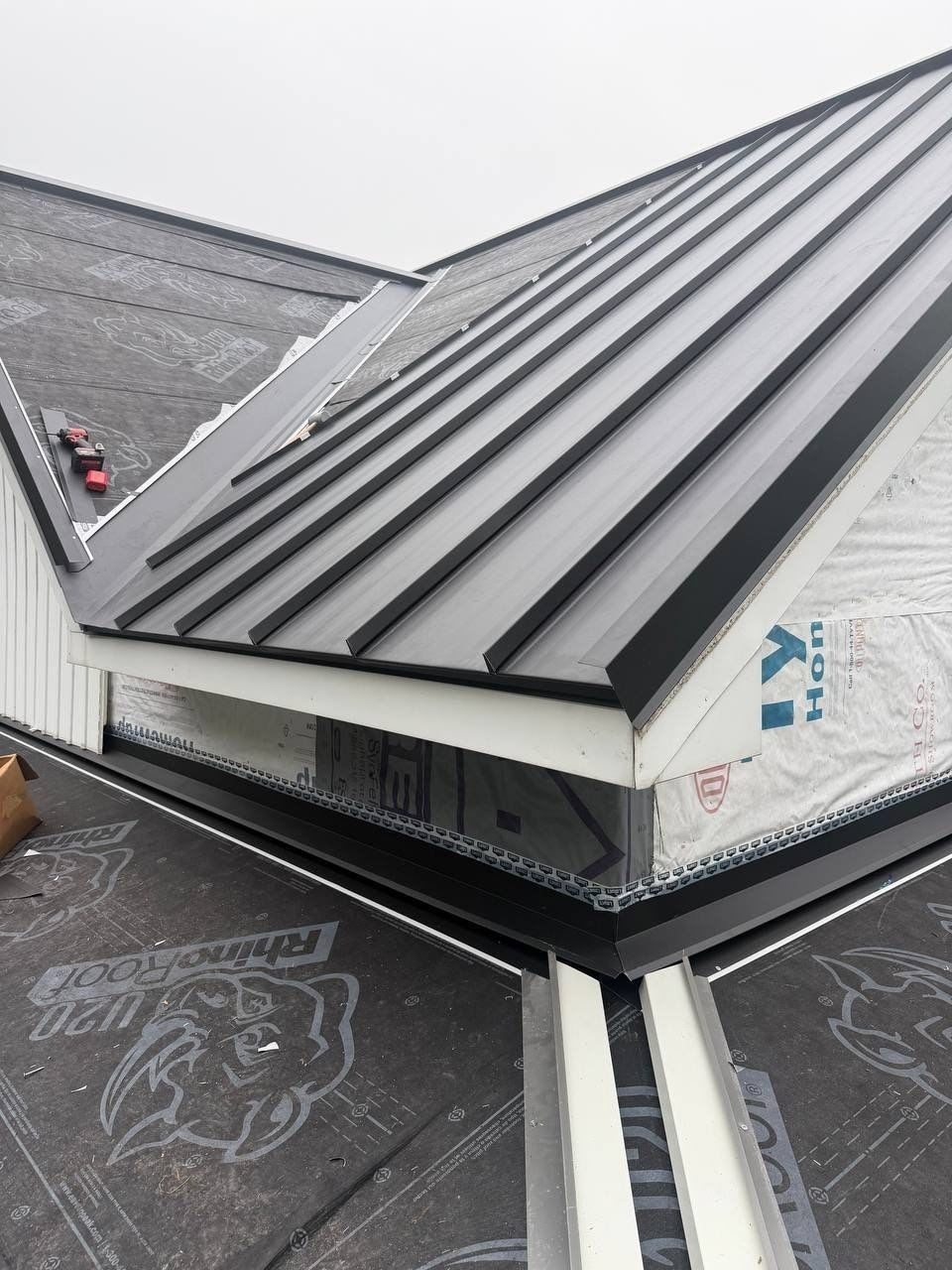
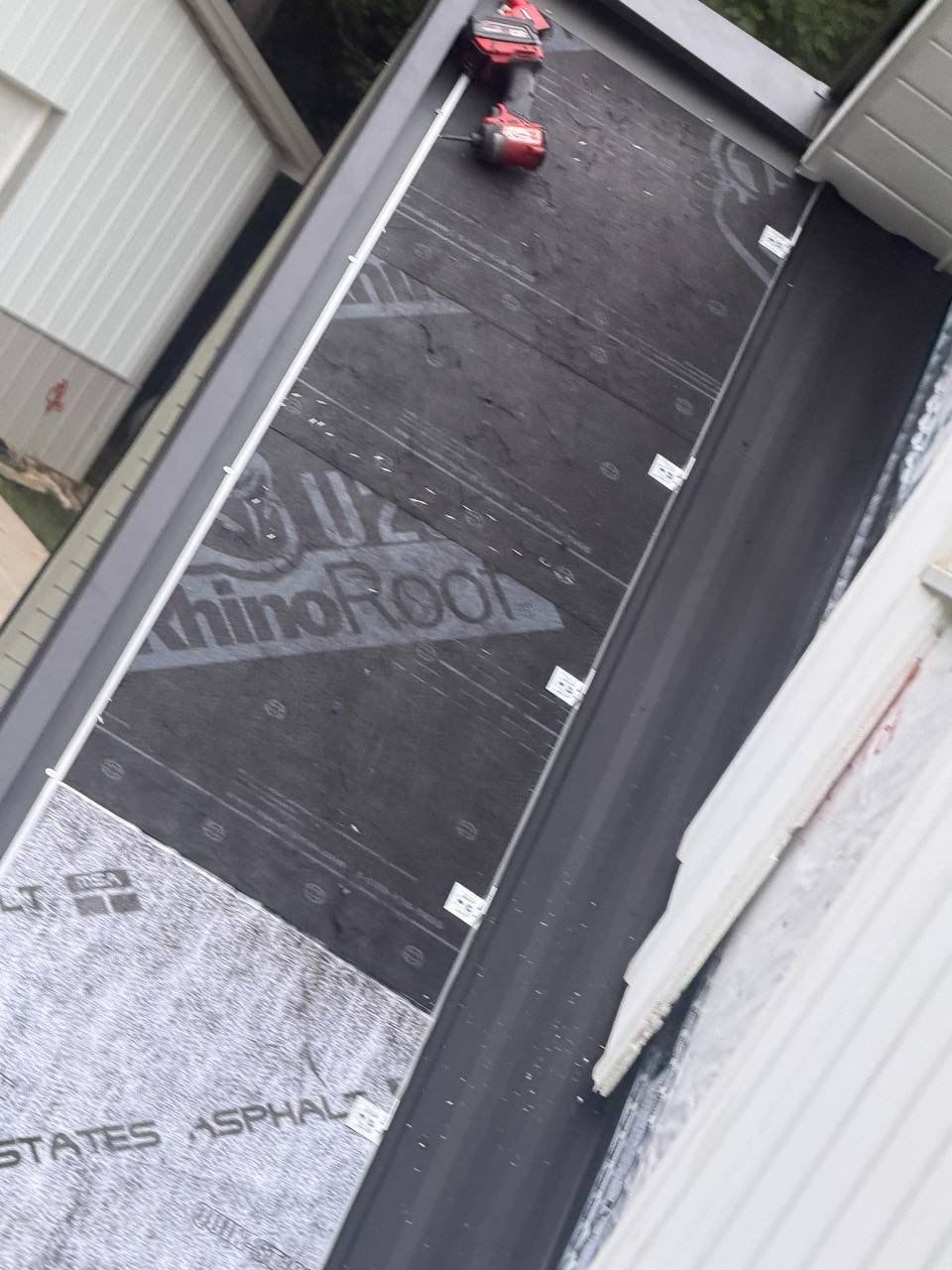
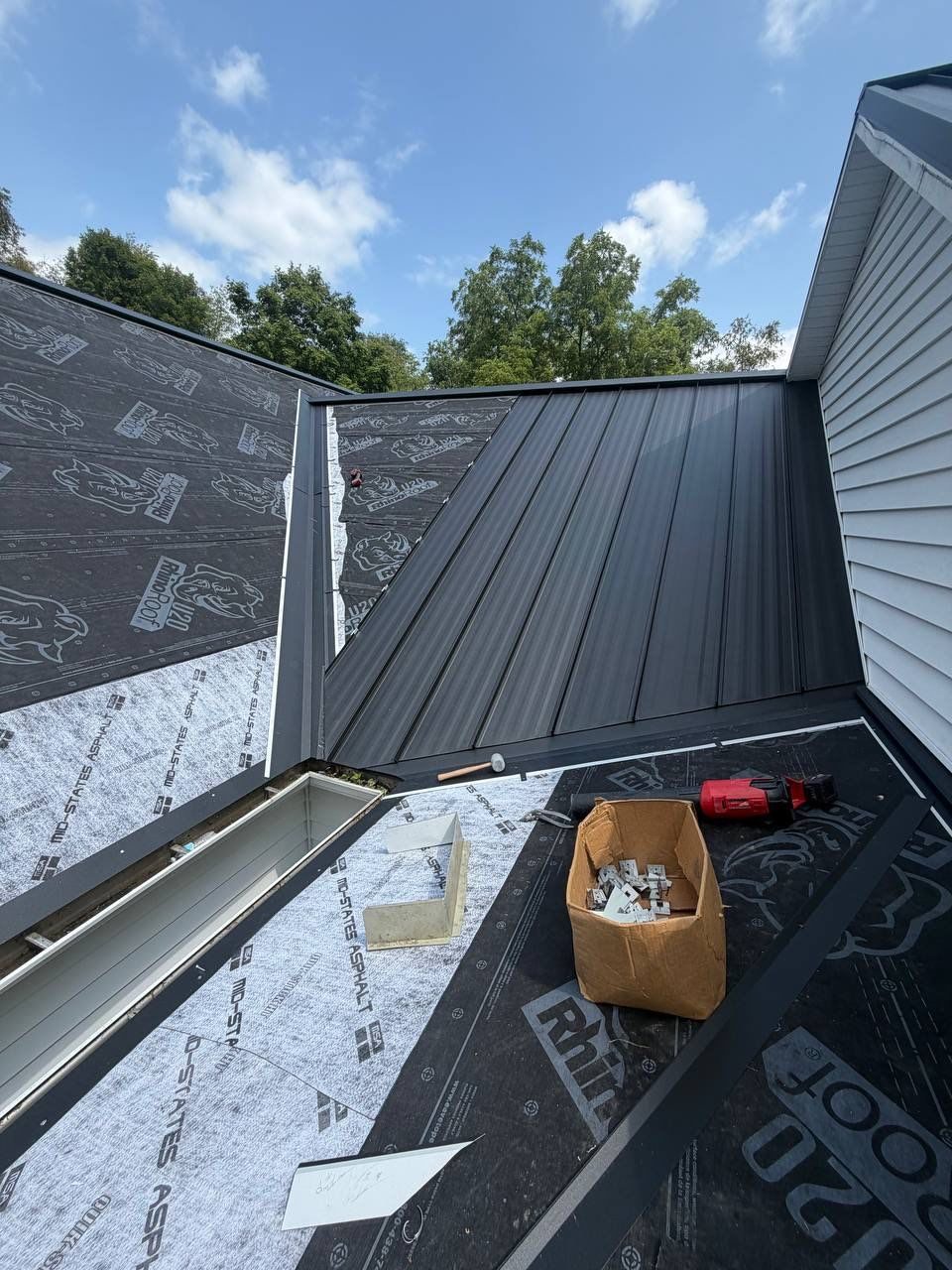
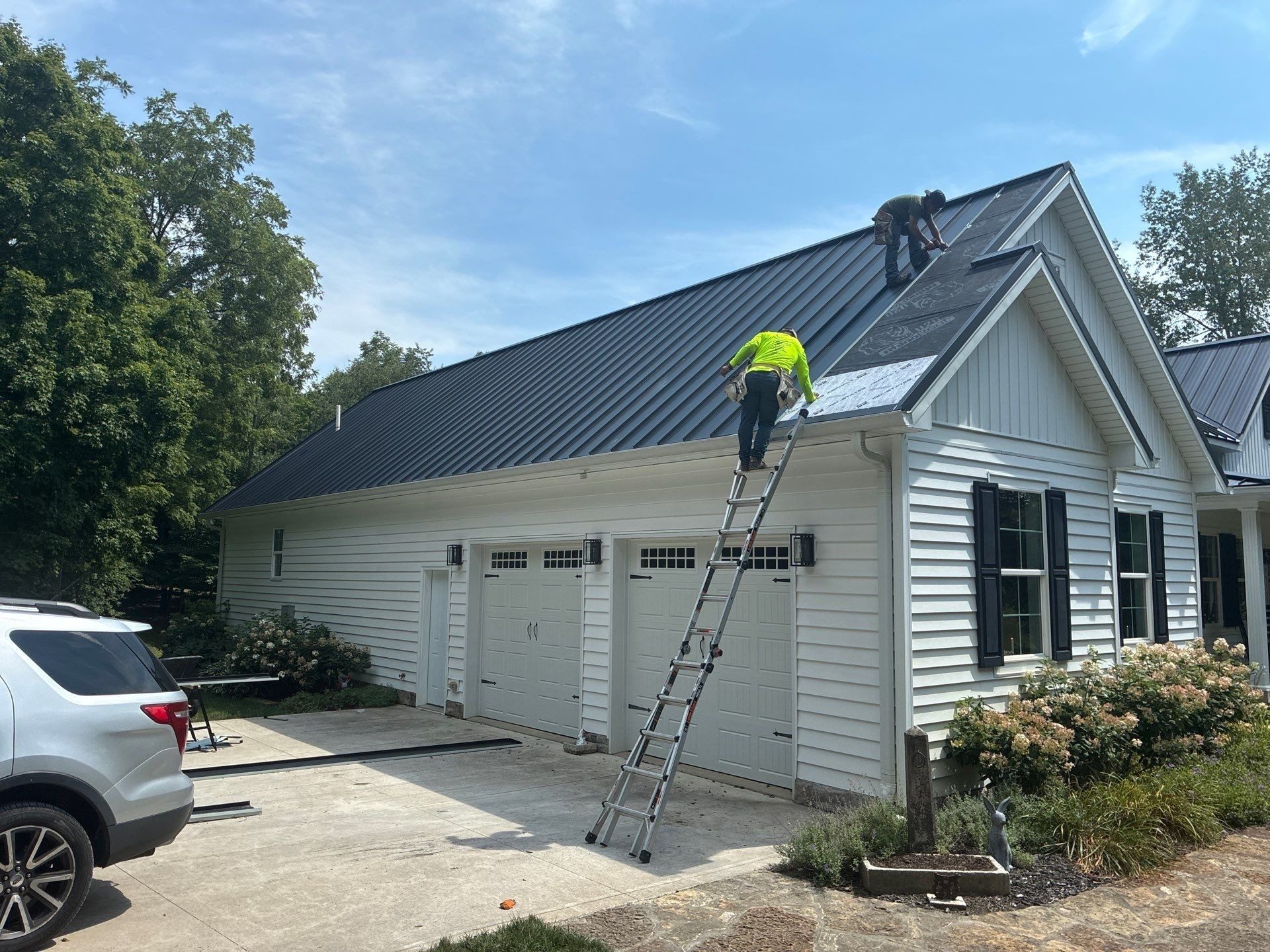
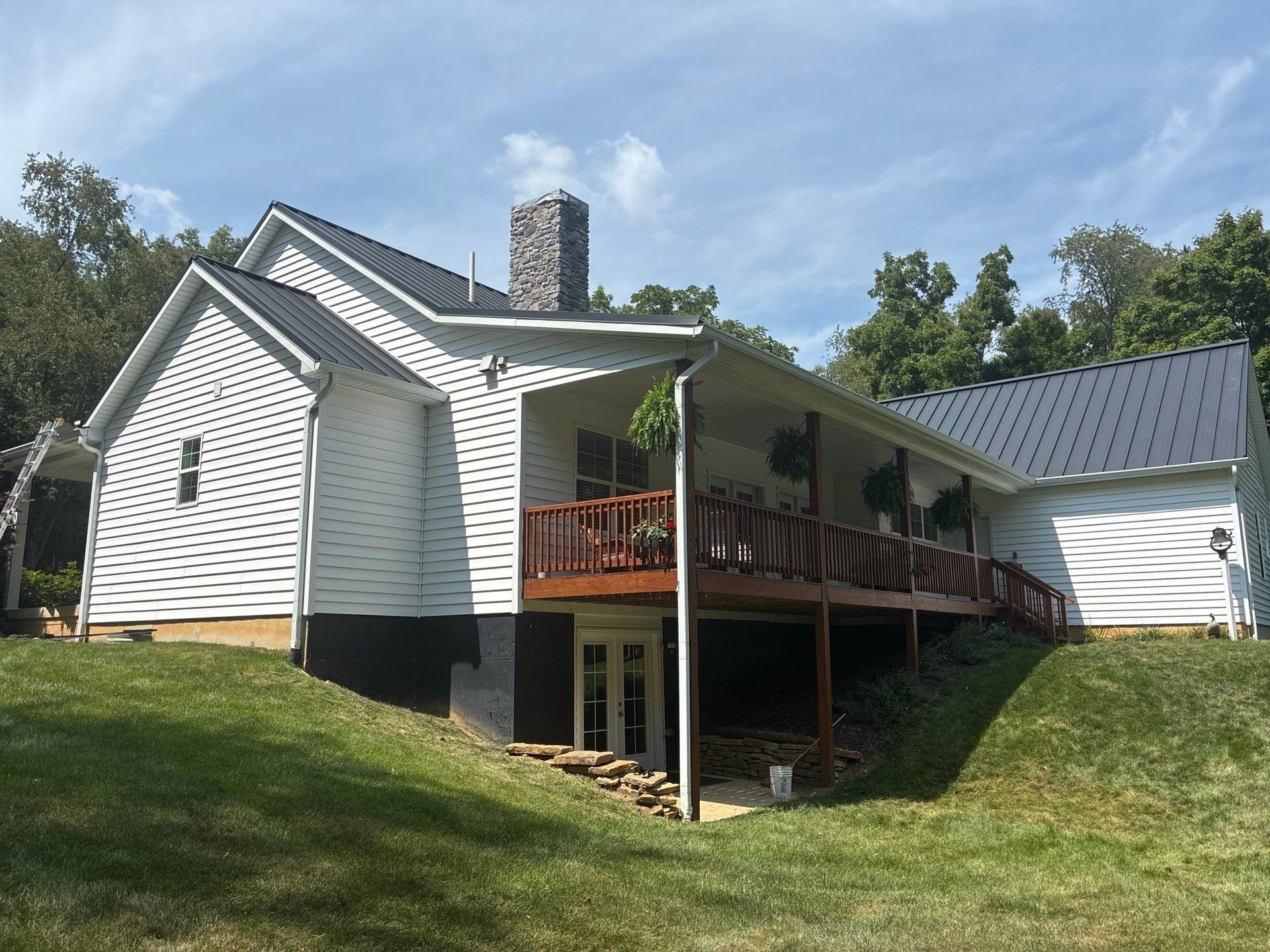
This Xenia home had an existing TuffRib metal roof, which we removed completely, along with siding where needed to set new flashings. We put new underlayment over the entire roof and a full ice and water shield on the back porch. The back chimney needed restoring, so we installed our flashings first. That let the chimney contractor rebuild it correctly with new OSB sheathing, a new cap, and new stone.
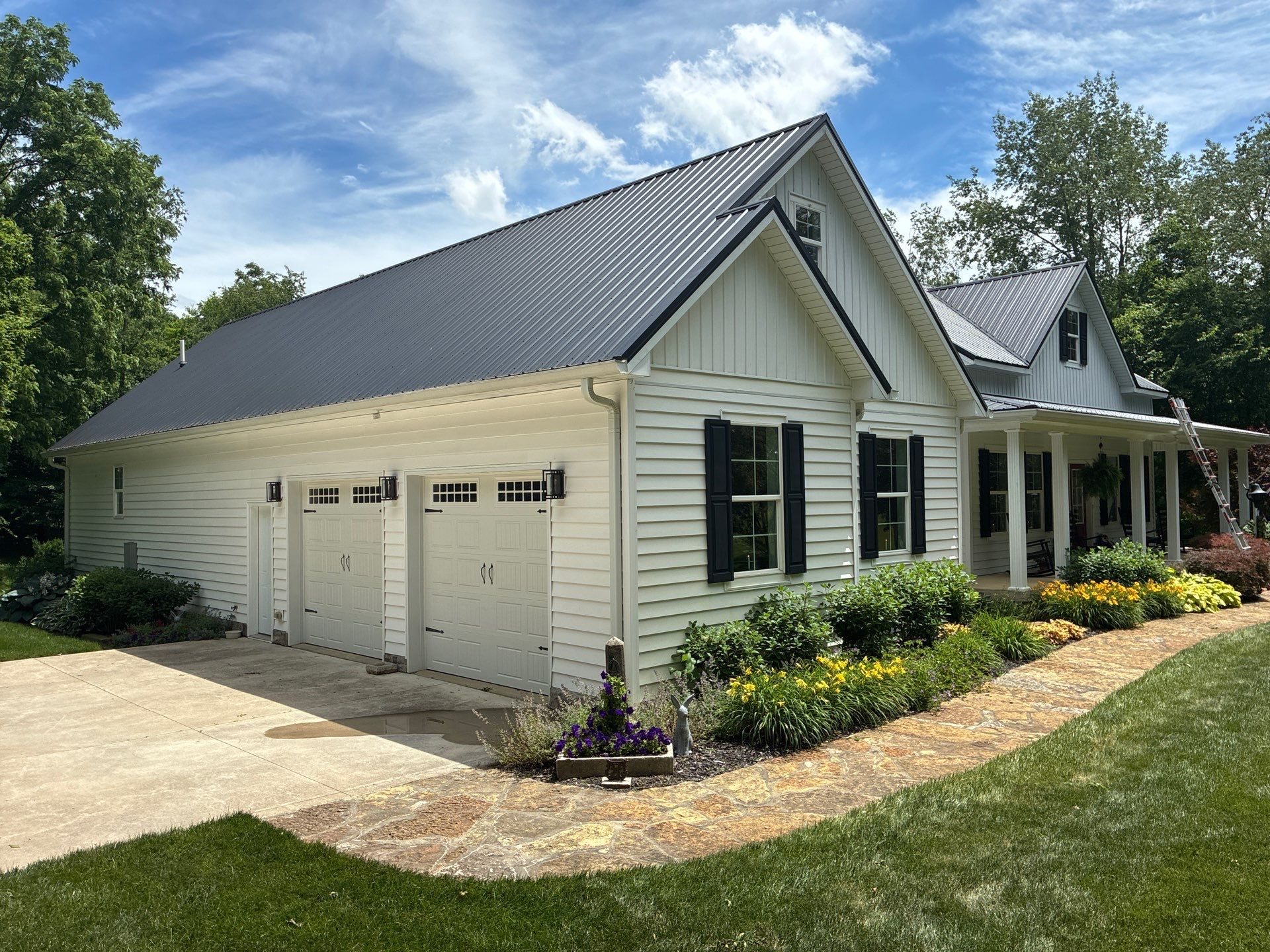
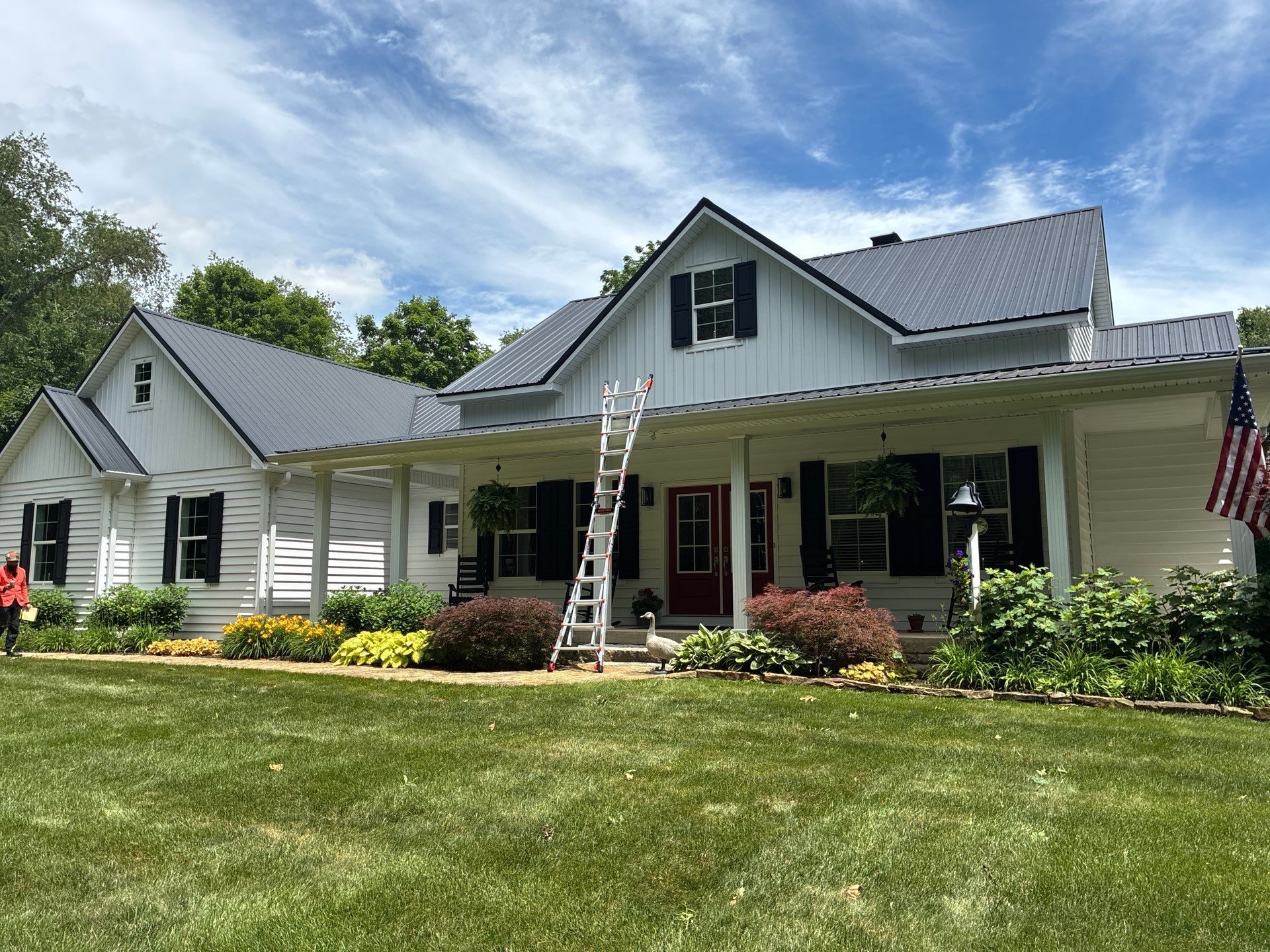
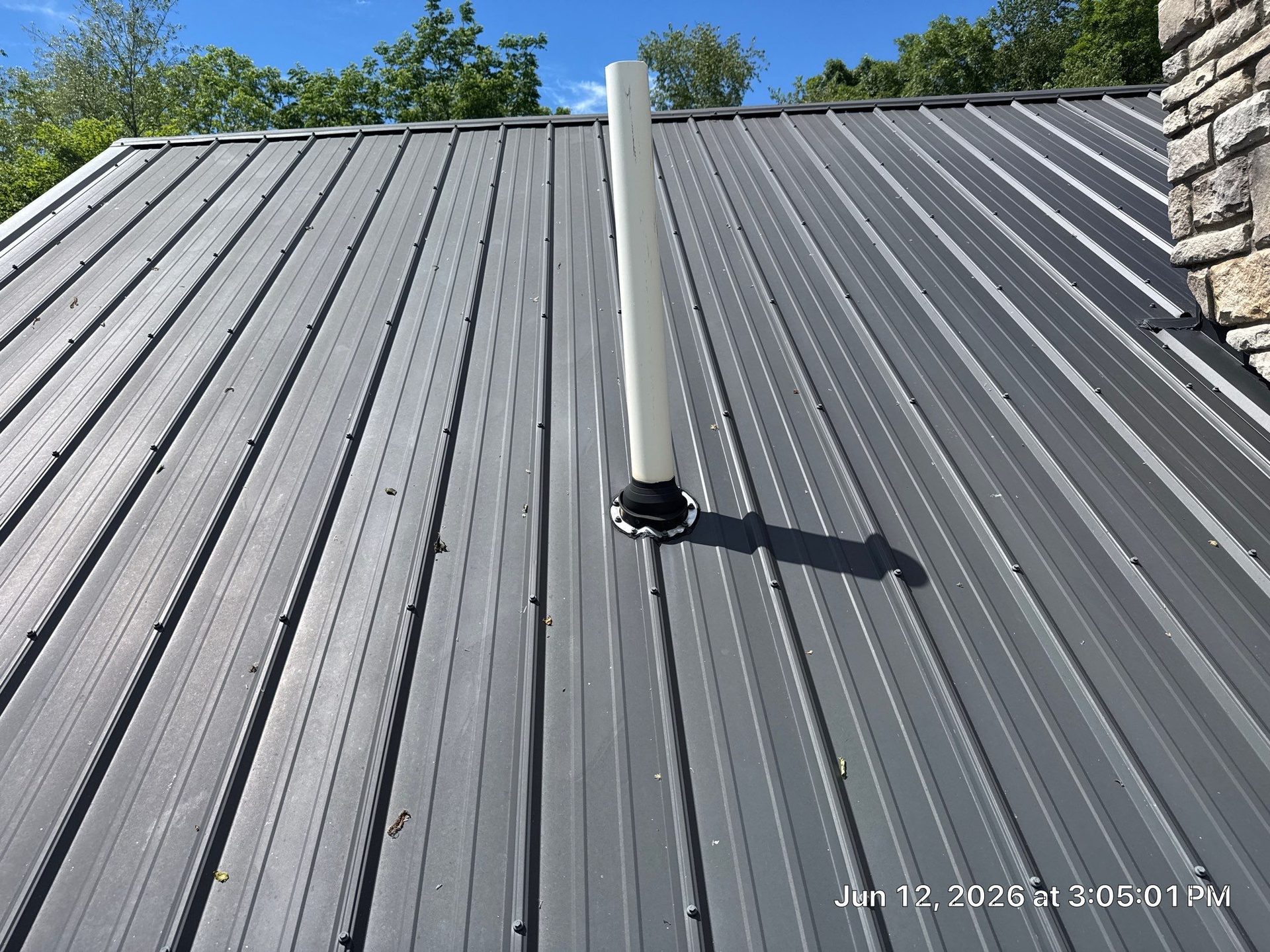
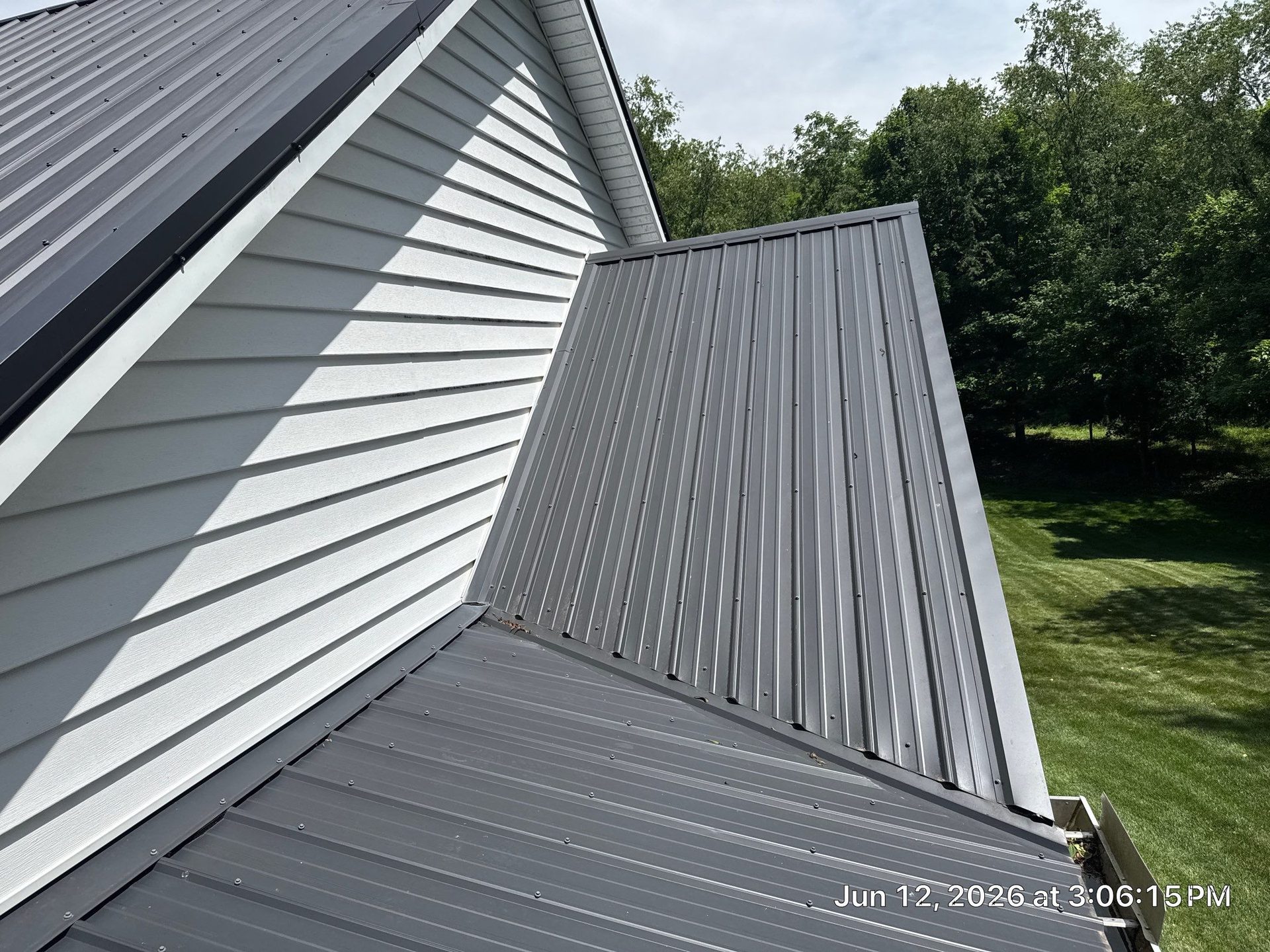
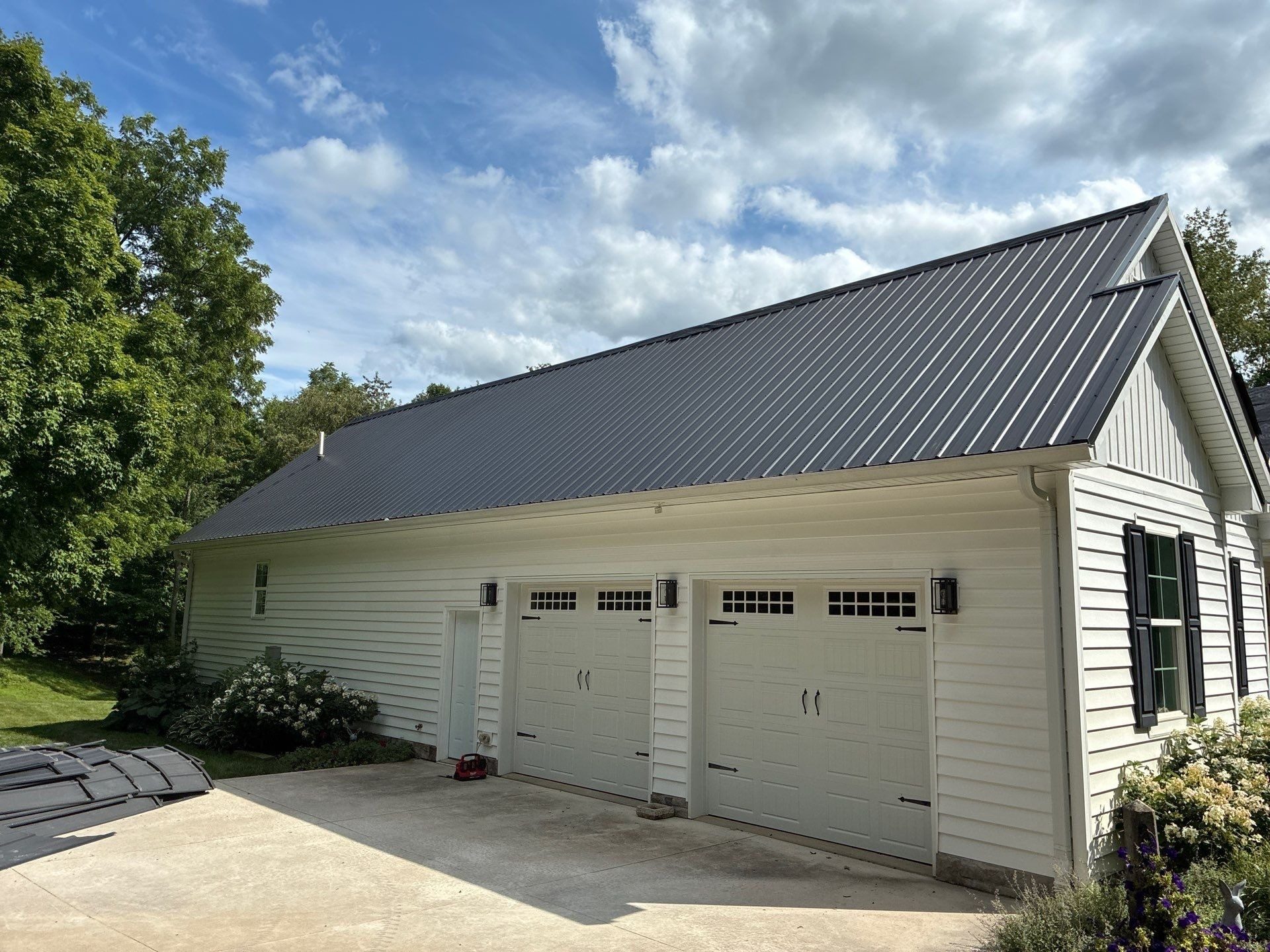
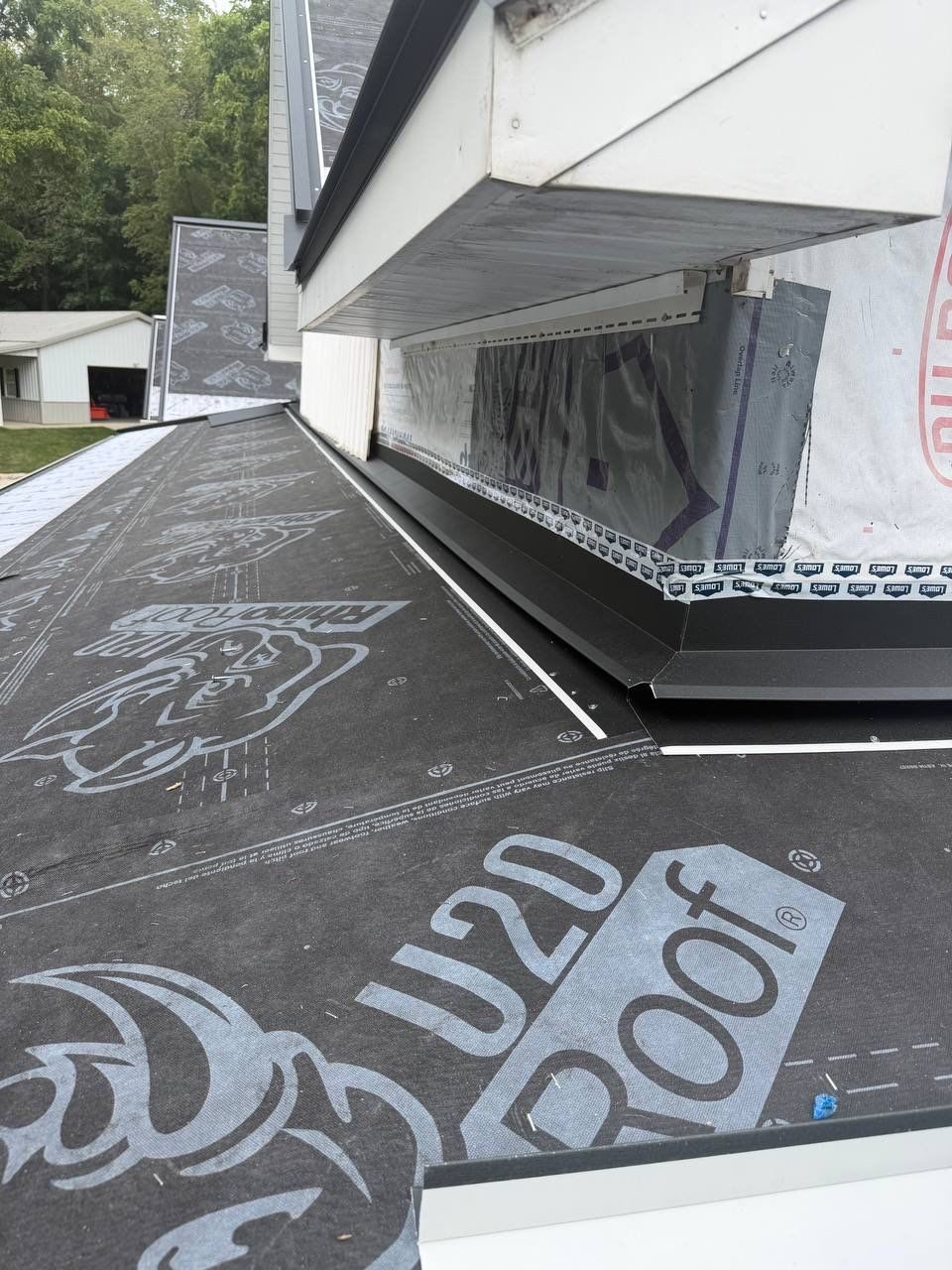
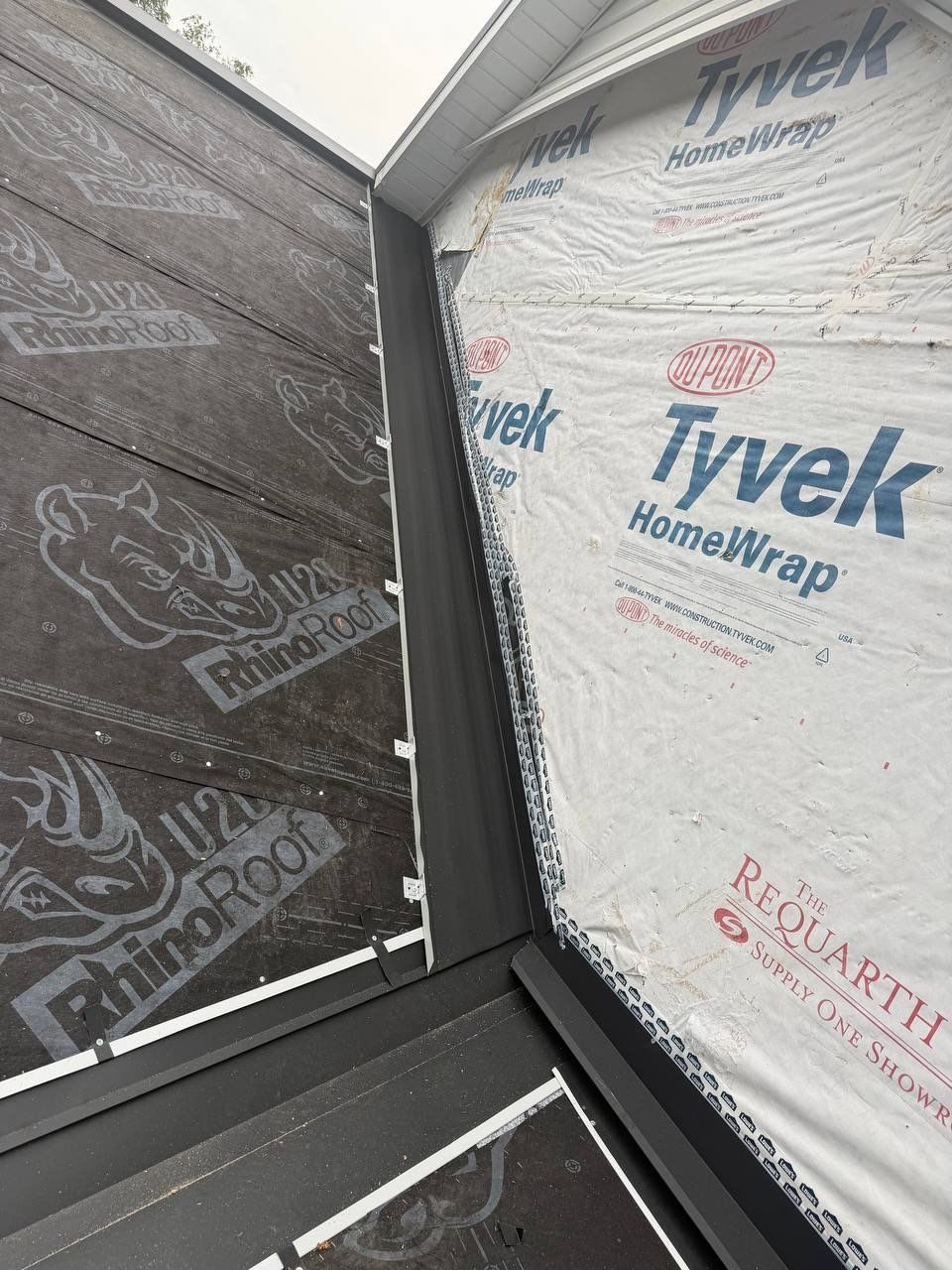
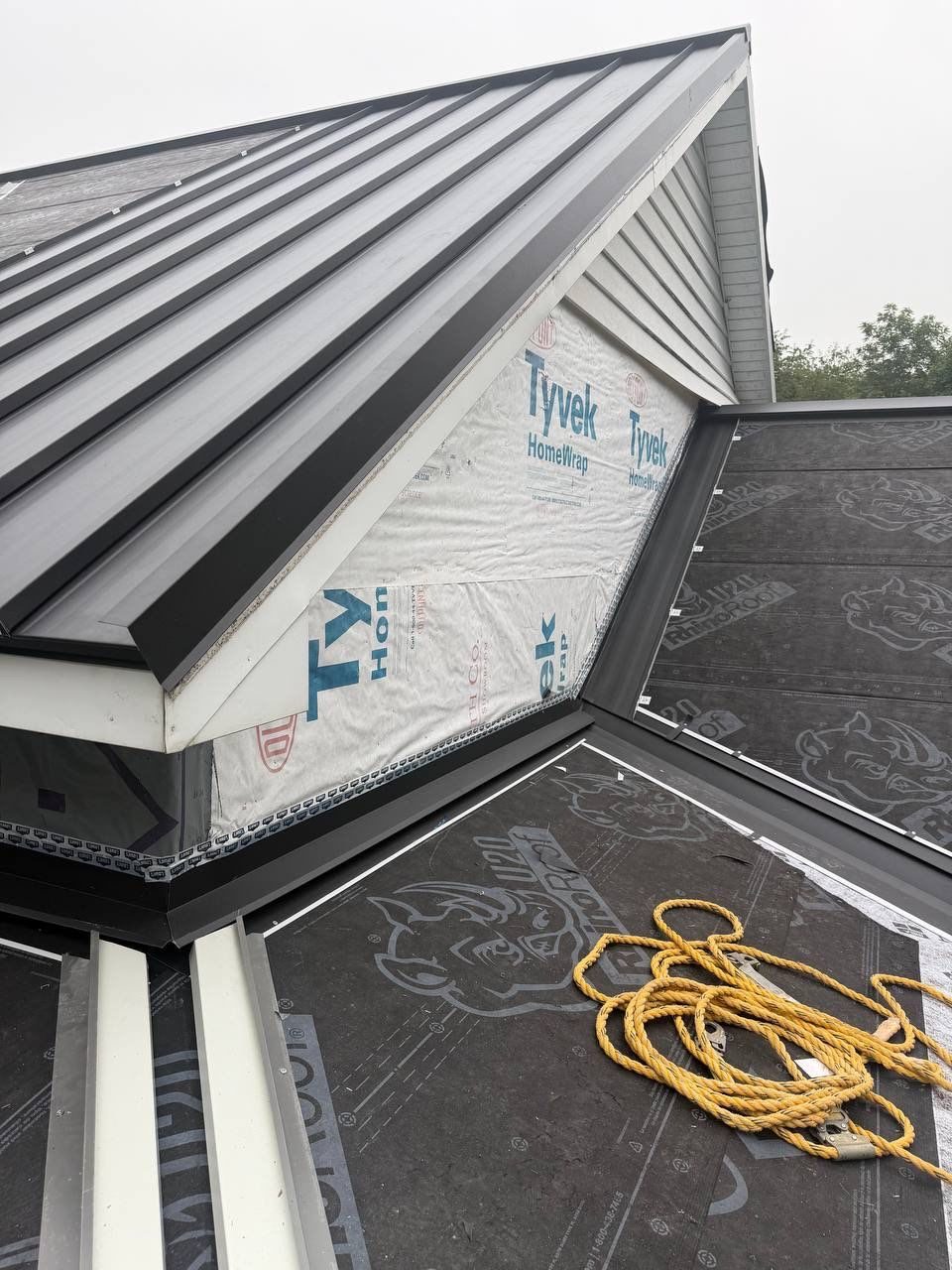
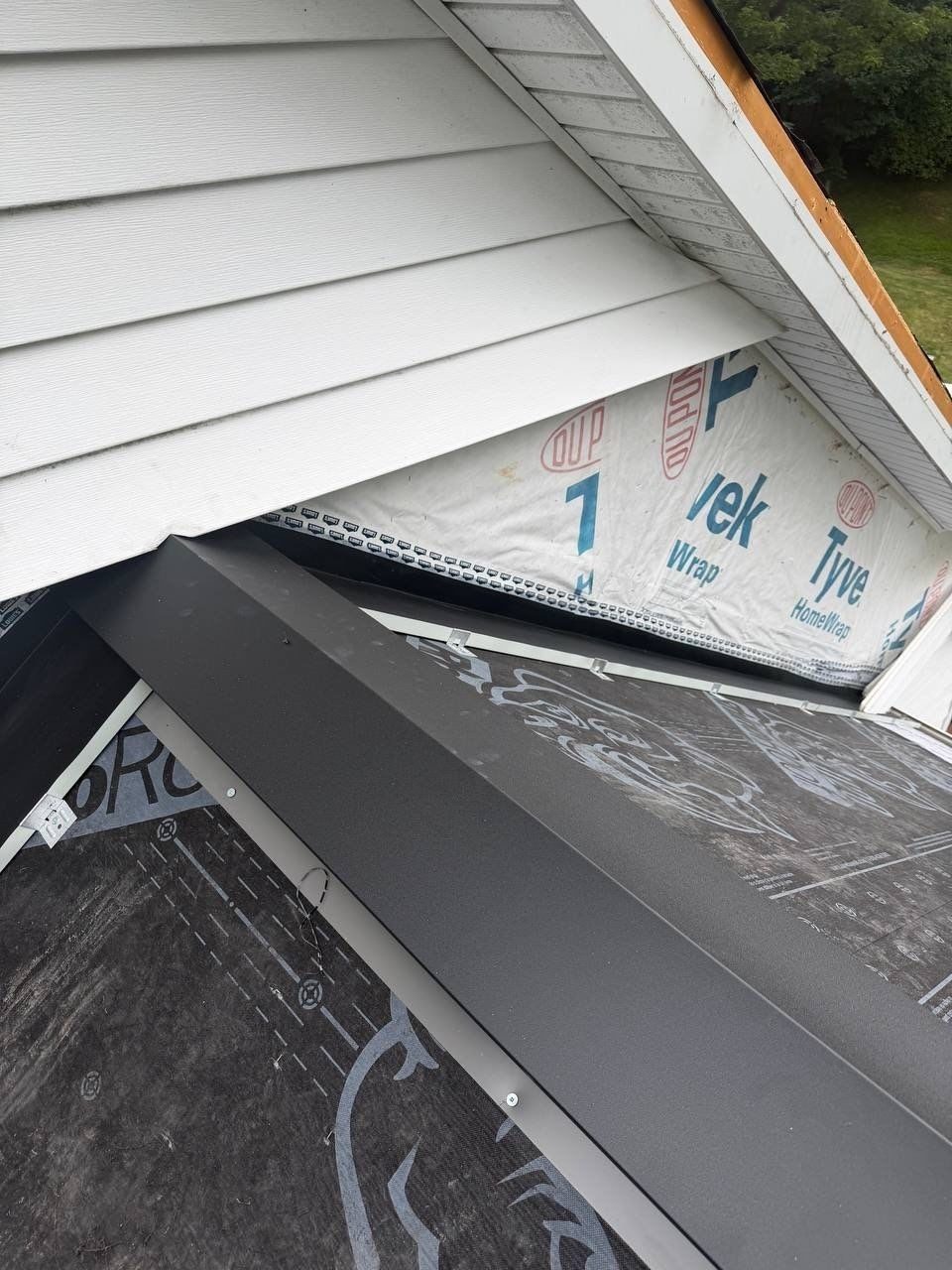
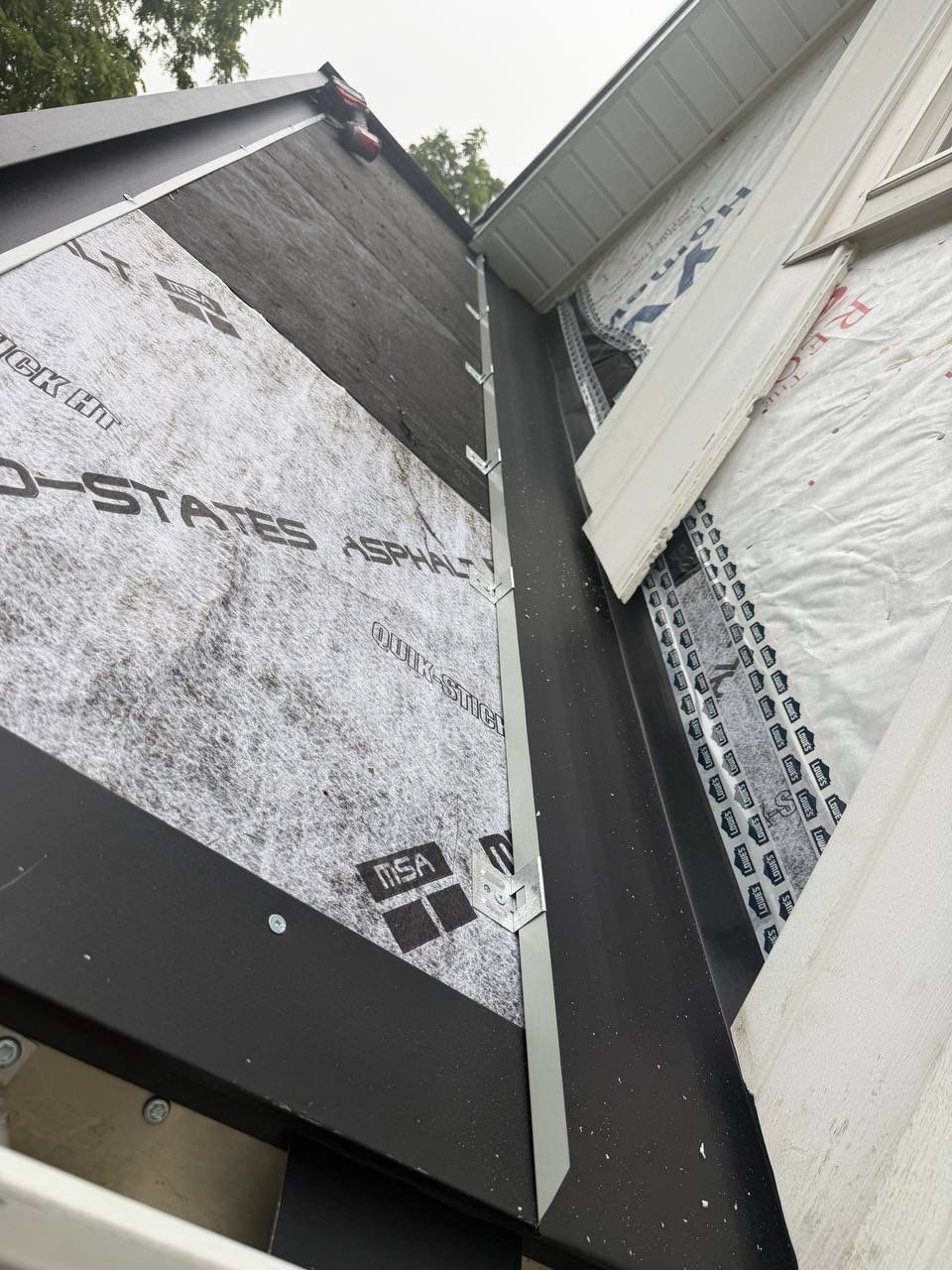
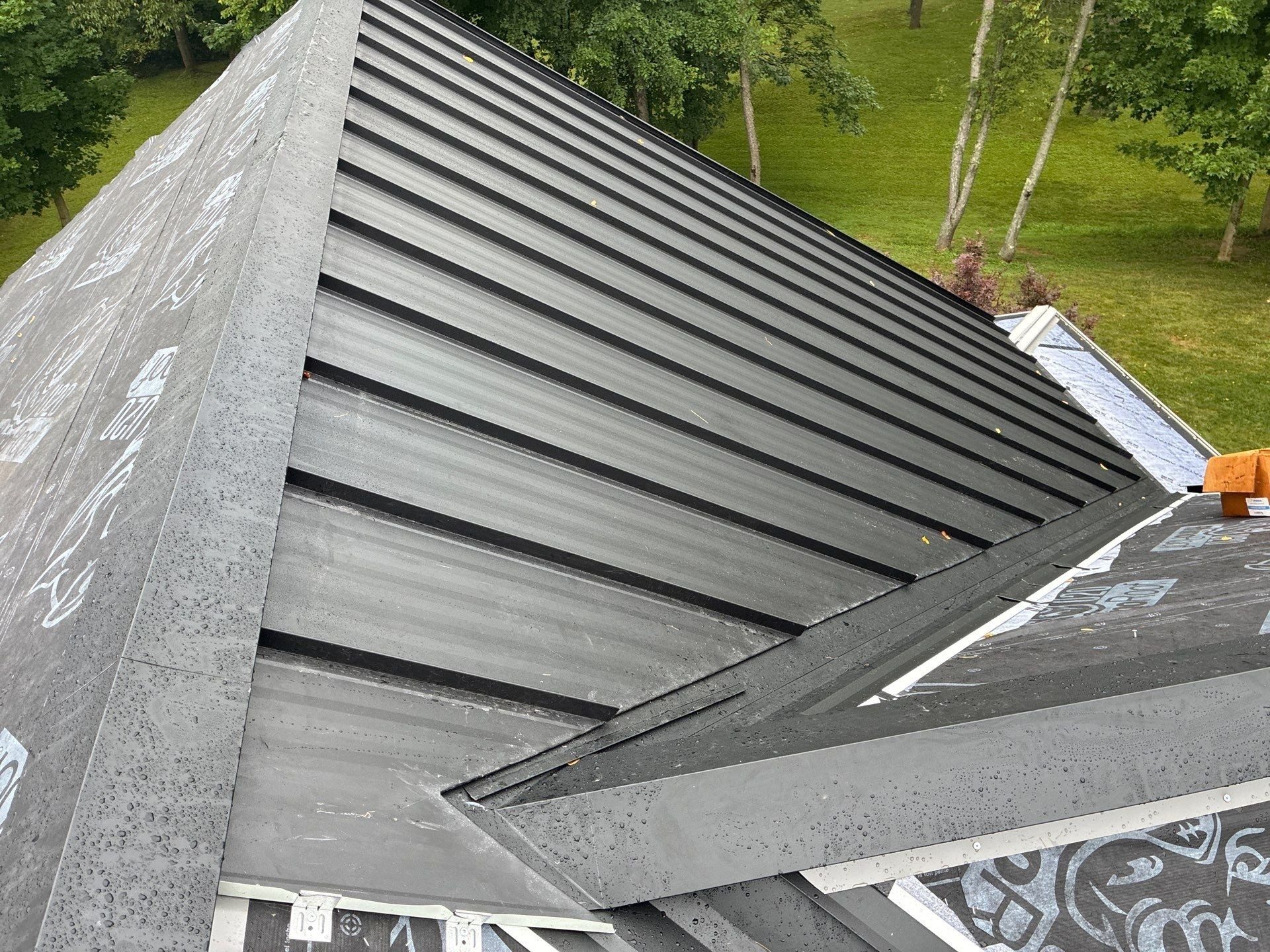
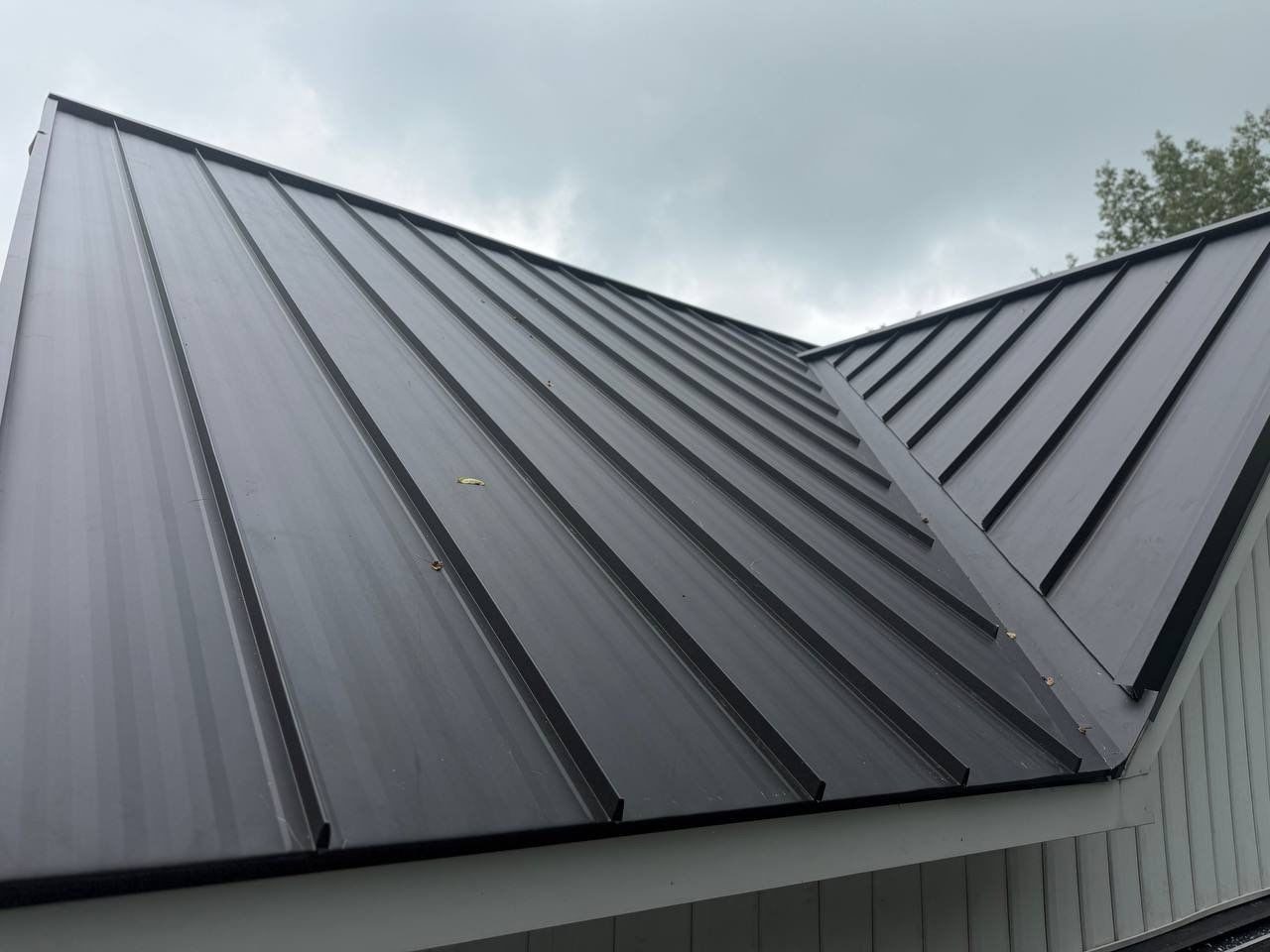
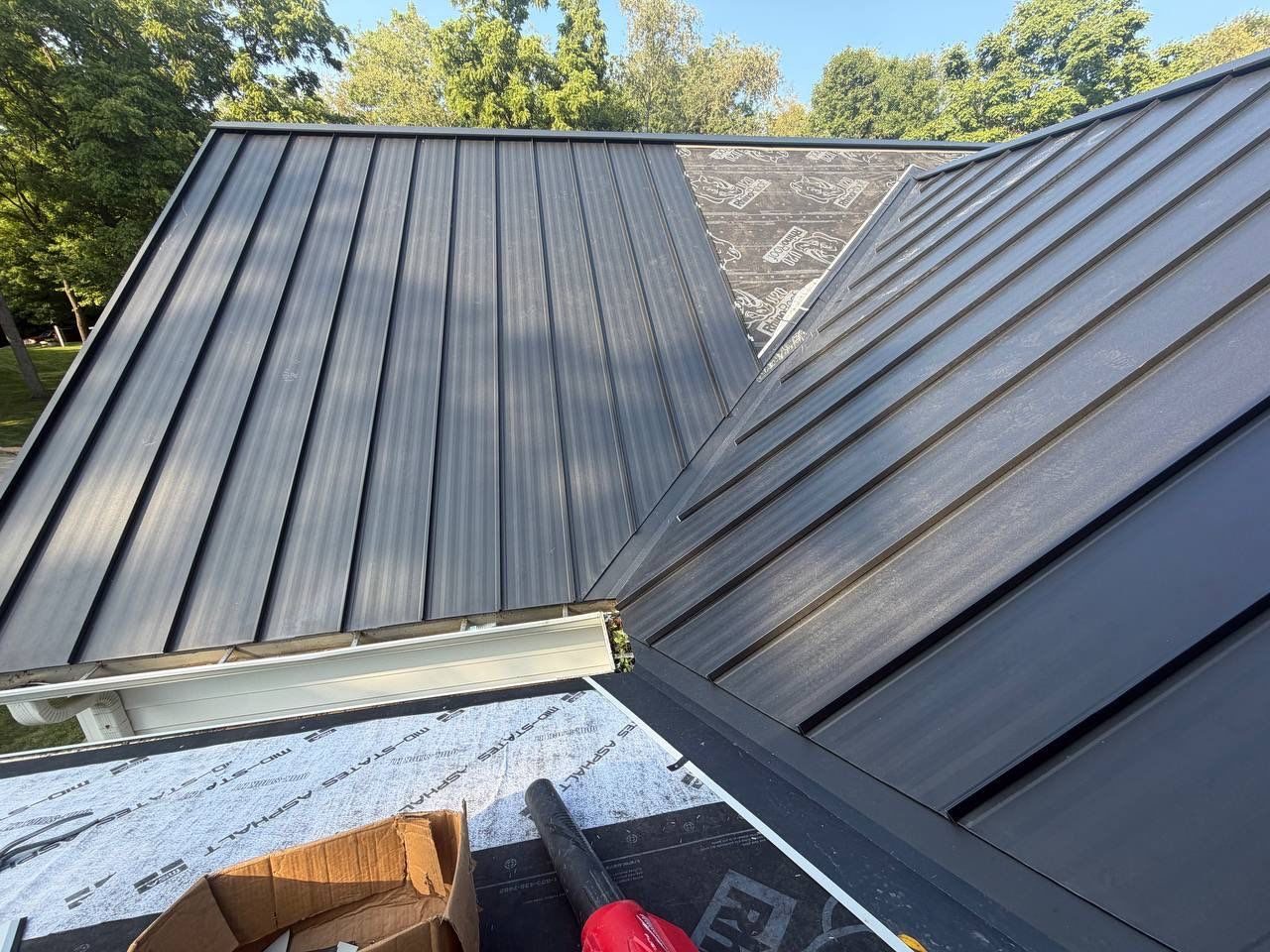
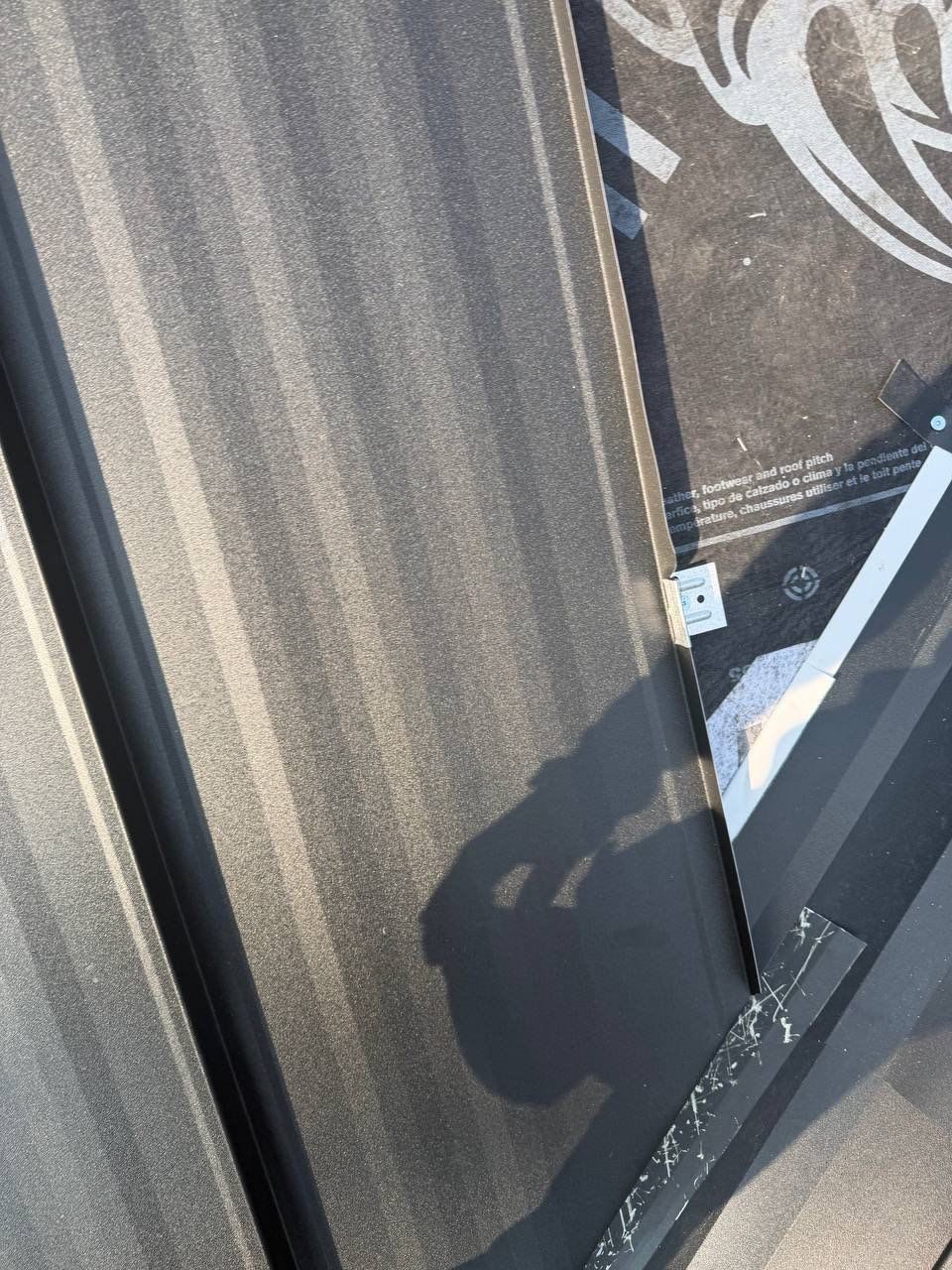
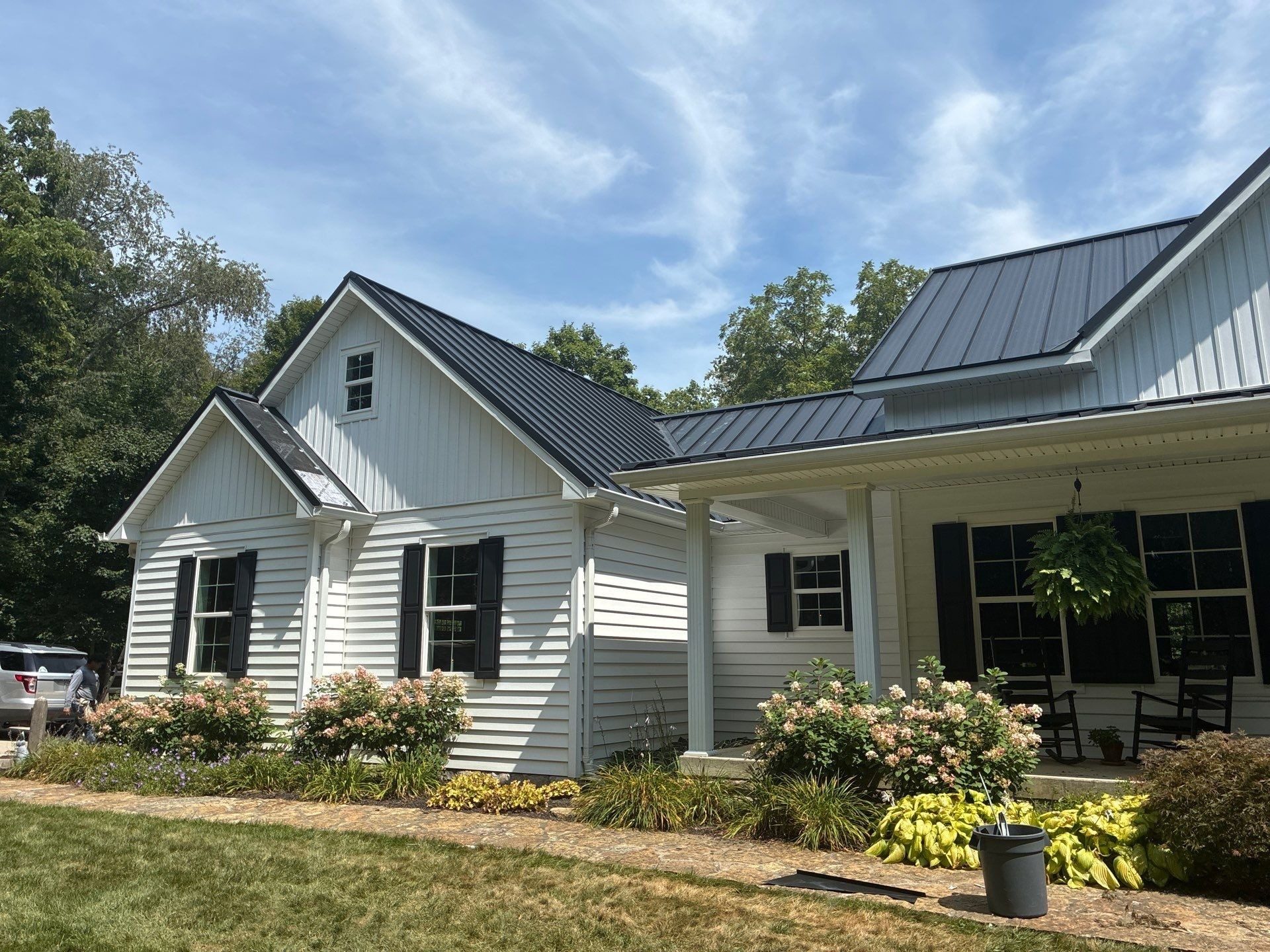
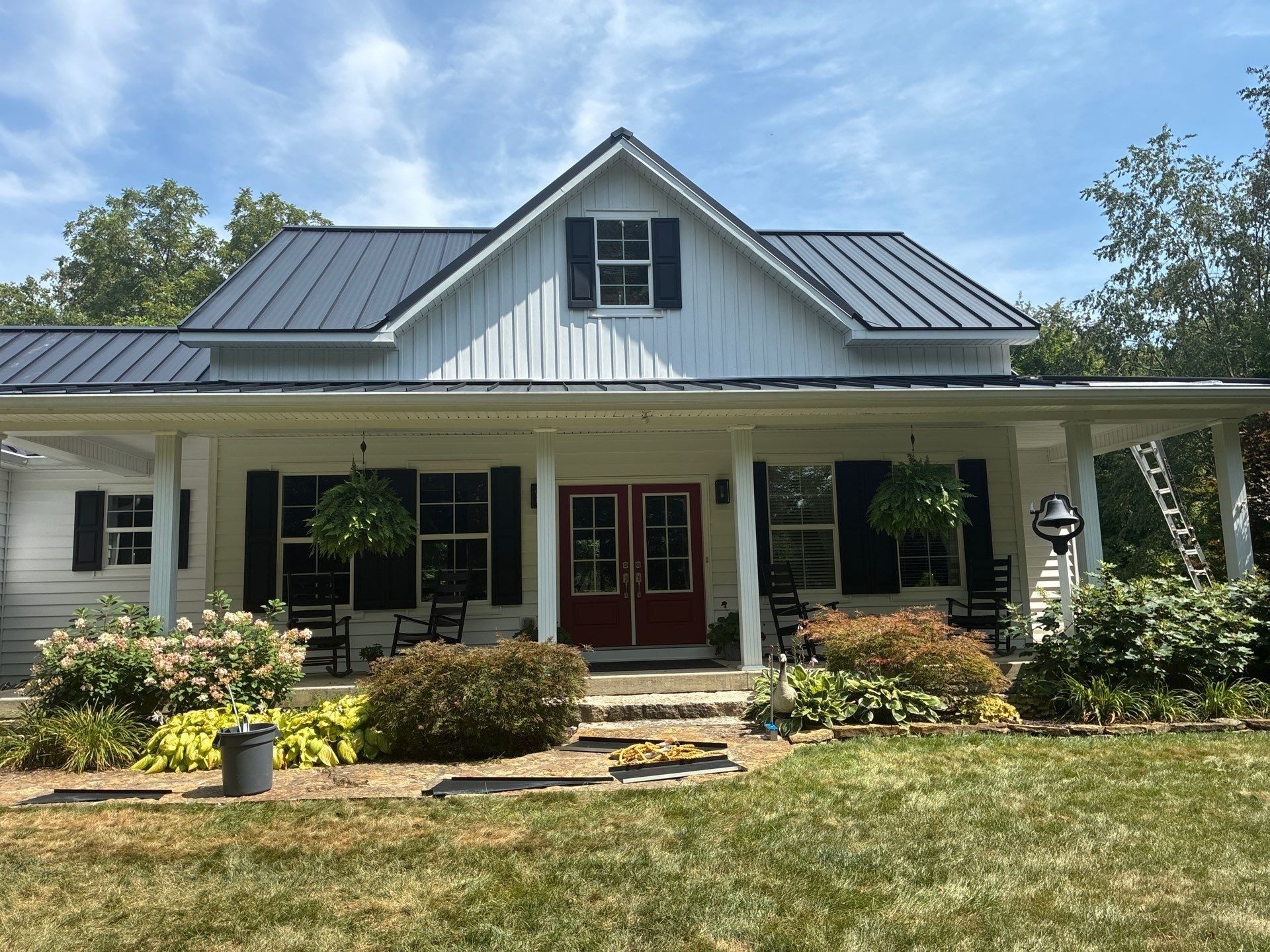
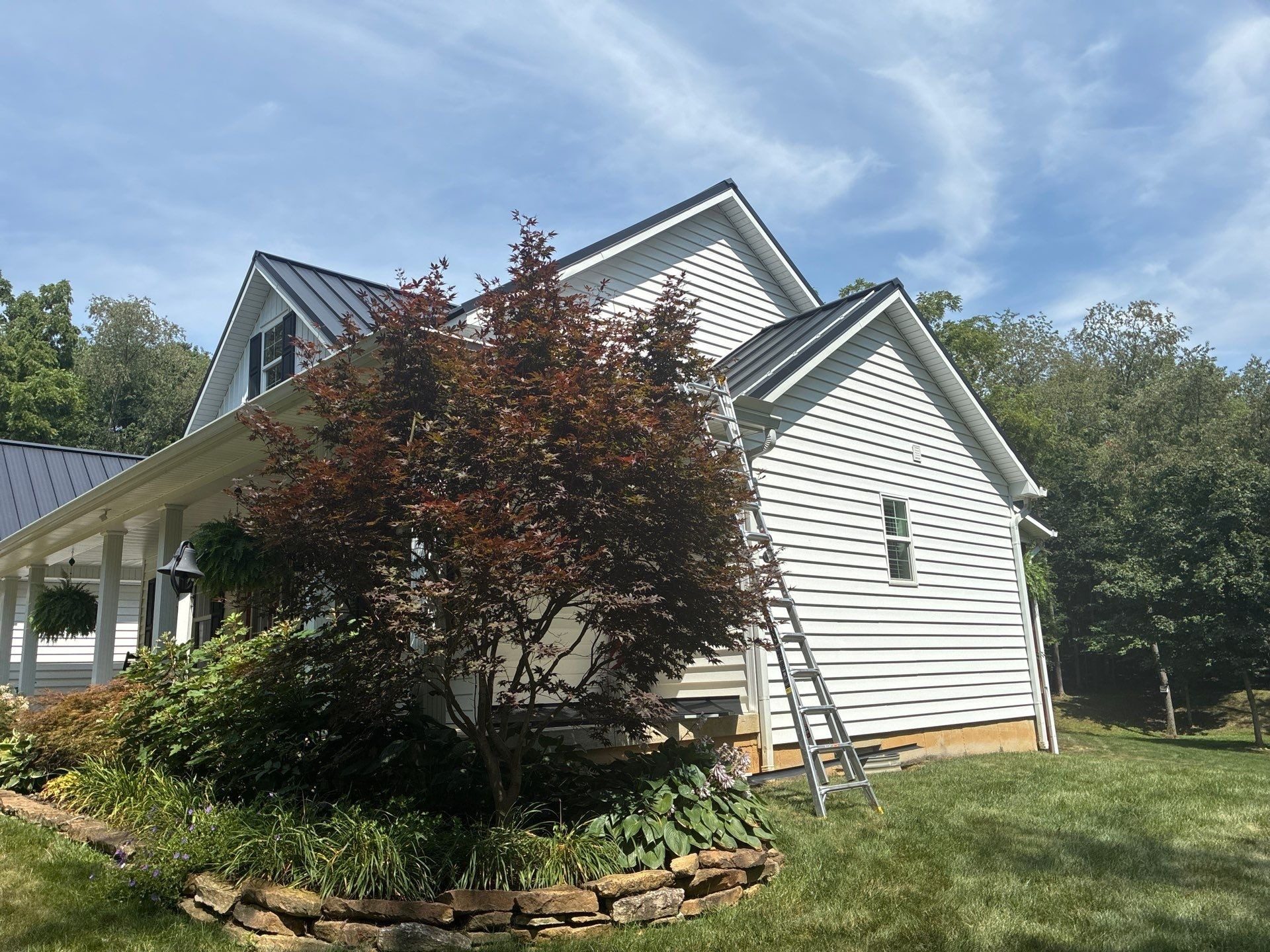
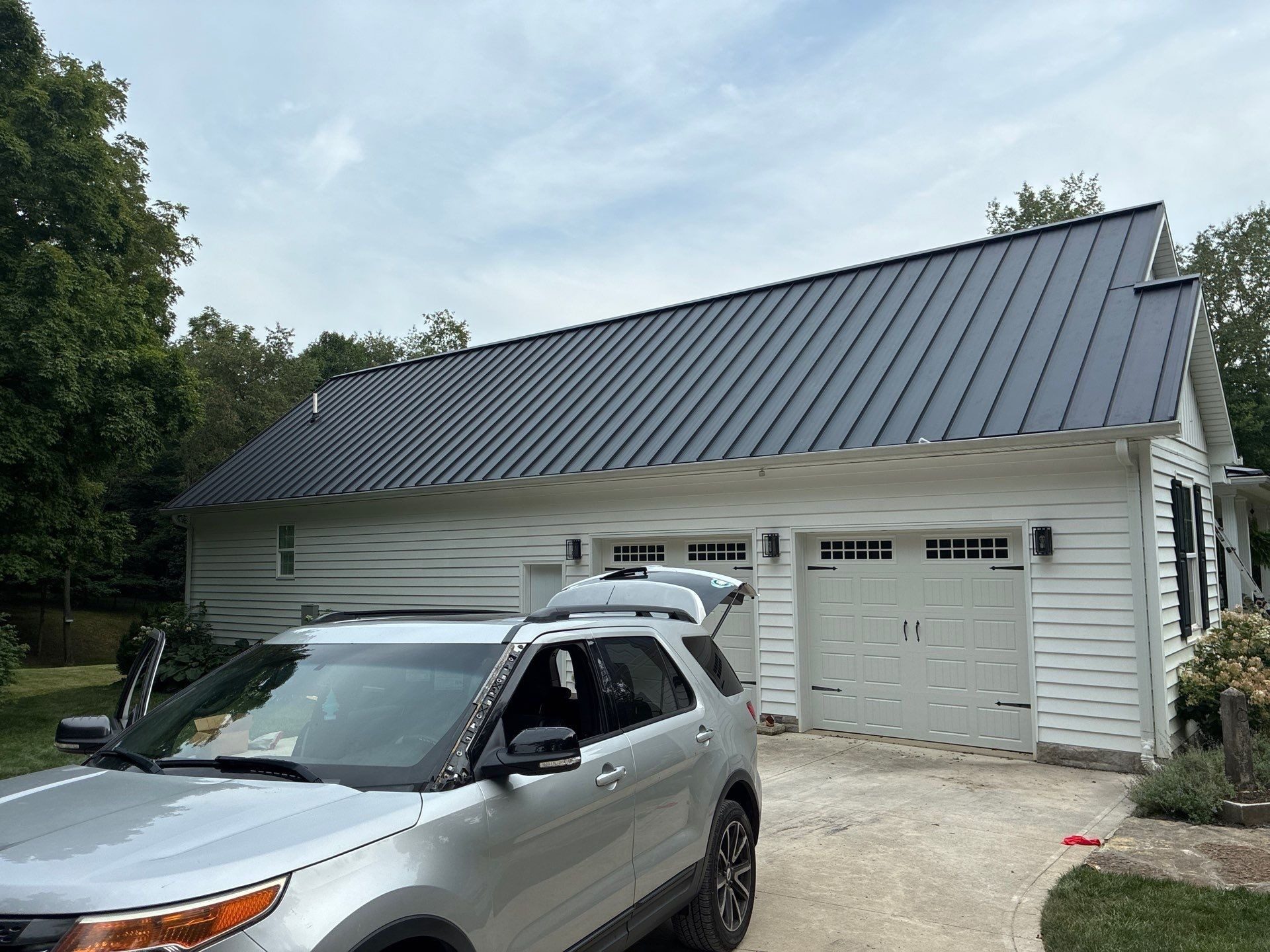
We use our standard standing seam approach: all trim and flashings go on first, including endwall and sidewall flashings, and the siding goes back on over them. Then we installed 26-gauge textured black 1.5-inch snap lock standing seam panels with clips across the whole roof, about 5,000 to 5,200 square feet. Partway through one slope, we noticed the panels drifting out of line with the rake edge. We pulled about five panels and reset them so every seam runs straight with the edge of the roof. It turned out beautifully.
Why it matters
Taking the old TuffRib roof all the way off gave us a clean start. New underlayment went down over the entire roof, so the new panels sit on a fresh layer instead of whatever was under the old metal. The back porch got a full ice and water shield for extra protection there.
Flashing is what keeps water out where the roof meets a wall or a chimney. Pulling the siding where needed let us set new endwall and sidewall flashings right against the wall. Putting the siding back over them means water runs down the siding and over the flashing instead of getting behind it. Flashing the chimney first meant the chimney contractor could rebuild around flashing that was already in place.
We install all trim and flashings before the panels so there’s far less foot traffic on the roof once the panels are on. That cuts down on scratches and other damage that can happen after the install.
Straight seams matter on a standing seam roof. When we saw the panels drifting out of line with the rake edge, we stopped and reset about five of them, because every panel should run straight and in line with the edge of the roof. On a roof this size, about 5,000 to 5,200 square feet, a small drift would only have grown with each panel.
Project Photos
Planning a Metal Roof in Xenia?
Learn more about standing seam metal roofing and our work on metal roofing in the Dayton area. For a free inspection, call Brothers Metal Roofing at (937) 423-9352.