Best metal roof by building
| Building | Best choice | Why |
|---|---|---|
| Home you plan to keep | Double lock standing seam | Hidden fasteners, strongest seam, our longest warranty (40 years) |
| Home on a tighter budget | Snap lock standing seam | Same clean look and hidden fasteners; 30-year warranty |
| Home where a shingle look matters | Painted metal shingles | Traditional look in steel; 30-year warranty |
| Low-slope roof | Double lock standing seam | The double-folded seam handles low slopes best |
| Pole barn, shop, ag building | TuffRib or PBR | Costs only slightly more than shingles; 20-year labor and material warranty |
| Statement roof or accents | Copper | Can outlast the building; weathers to a patina |
Panel types, ranked for a house
- Standing seam. Panels join at raised seams with fasteners hidden underneath. One piece from eave to ridge means no horizontal laps. The double lock vs. snap lock choice is about how the seam closes.
- Metal shingles. Interlocking steel pieces shaped like shingles or shakes. More joints than standing seam, but a traditional look.
- Stone-coated steel. Steel shingles or tiles with a stone-granule surface. See is stone-coated steel worth it?
- Exposed-fastener panels. Ribbed or corrugated panels screwed through the face. Excellent value on outbuildings; on a house, the screws and washers need checking over the years.
Which metal?
- Coated steel is the standard for homes and barns: strong, affordable, available in dozens of colors.
- Aluminum resists salt air, which matters on the coast, not in the Miami Valley.
- Copper is the premium choice. It does not rust; it weathers from bright to brown to green. See copper roofing.
Which gauge?
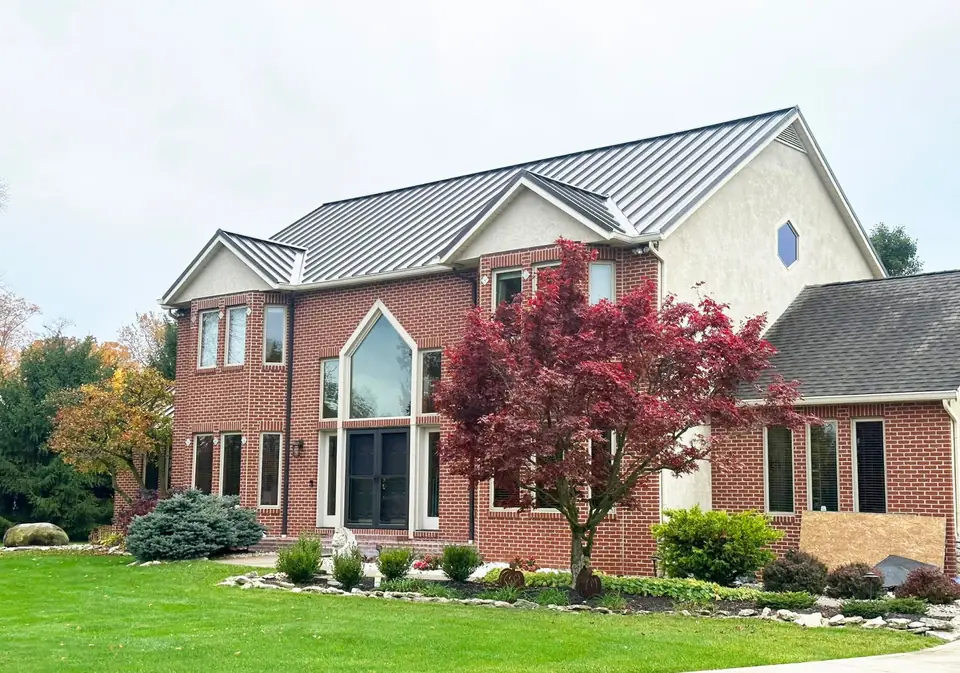
With steel, a lower gauge number means thicker metal. 24 gauge is thicker and stiffer, resists dents better and stays flatter on wide panels. 26 gauge is lighter and costs less, and is a solid choice on most homes. We install both in standing seam; our Centerville roof is 24 gauge and our Lynn, Indiana roof is 26 gauge.
The part that matters more than the panel
The best panel installed badly is a bad roof. Ask any installer whether they tear off to the deck, what goes under the panels, whether trim and flashing go on first, and what warranty they will put in writing.